
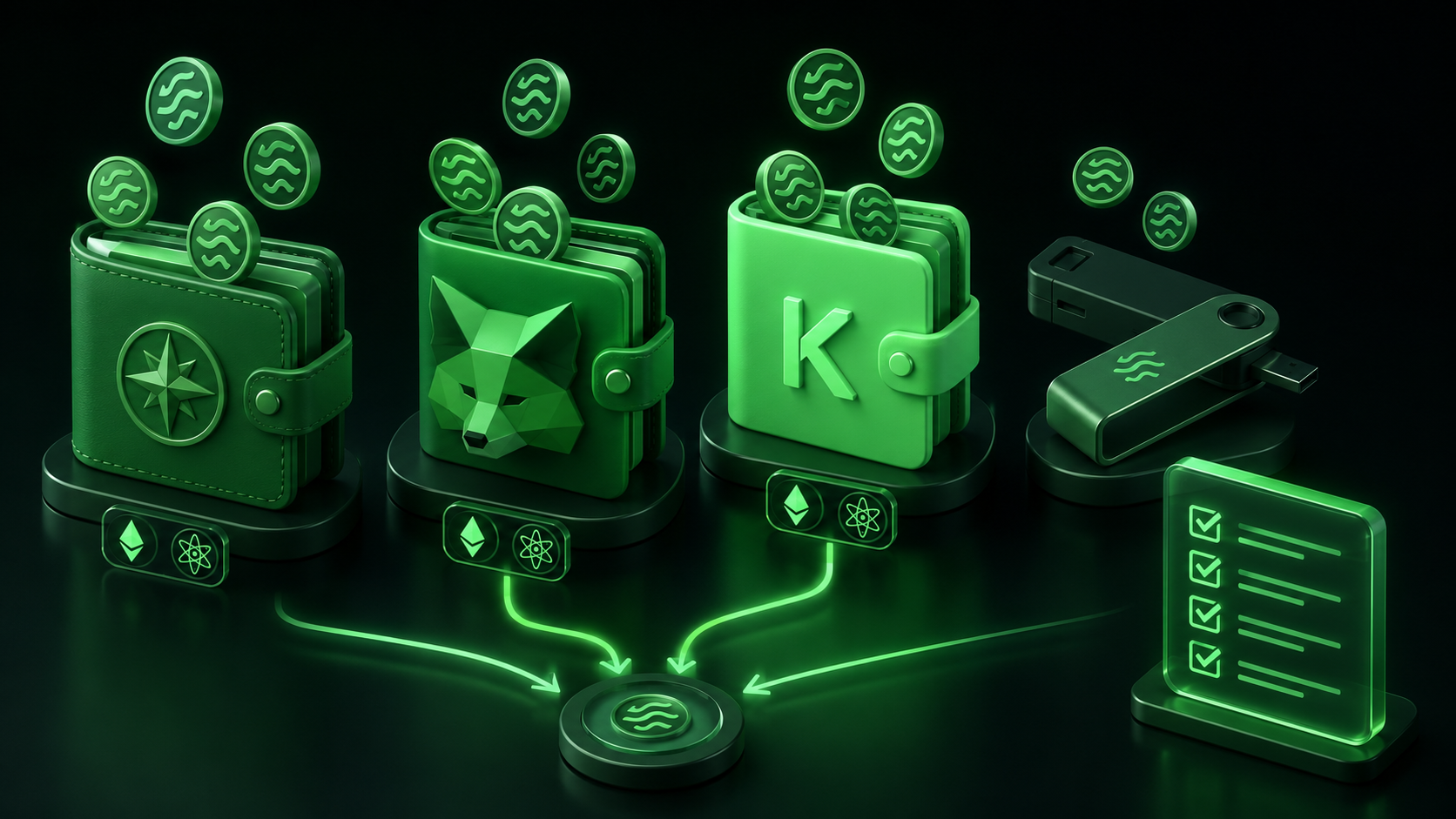
Choosing the right wallet for SEI depends on what you plan to do with your tokens. A trader who moves between DeFi protocols daily has different needs than someone staking for long-term rewards. Sei's dual nature as both a Cosmos-based and EVM-compatible chain means wallet support comes from two distinct ecosystems, and each option carries different tradeoffs in usability, security, and feature depth.
Compass Wallet
Compass is the closest thing to a purpose-built Sei wallet. Developed by the team behind Leap Wallet (a Cosmos ecosystem staple), Compass was designed specifically for the Sei network and supports its full feature set.
Key strengths include native staking directly within the wallet interface, full dApp browser for interacting with Sei-based DeFi protocols, and built-in token swaps. Compass handles both the Cosmos and EVM sides of Sei, which means you can manage native SEI operations and interact with Solidity-based contracts from a single interface.
The limitation is scope. Compass is Sei-focused, so if you hold assets across multiple chains, you'll need a second wallet for everything else. For a deeper look at how SEI staking works through Compass and other validators, see the dedicated staking guide.
Available as a browser extension for Chrome and Brave.
MetaMask
Since Sei V2 introduced full EVM compatibility, MetaMask works natively with the Sei network. For anyone already using MetaMask for Ethereum or other EVM chains, adding Sei is a matter of configuring a custom network with Sei's RPC details (Chain ID: 1329).
Setting up Sei on MetaMask
- Open MetaMask and navigate to Settings > Networks > Add Network
- Enter the Sei EVM mainnet details: Network Name "Sei," RPC URL from Sei's documentation, Chain ID 1329
- Save and switch to the Sei network
MetaMask gives you access to Sei's EVM-side dApps, token transfers, and smart contract interactions. The tradeoff: MetaMask only sees the EVM side of Sei. Native Cosmos operations like staking, IBC transfers, and interacting with CosmWasm contracts require a Cosmos-native wallet like Compass or Keplr.
For traders who primarily interact with EVM-based DeFi on Sei, MetaMask is perfectly functional. For those who want the full Sei experience, pair it with a Cosmos wallet.
Keplr
Keplr is the standard multi-chain wallet for the Cosmos ecosystem and supports Sei alongside dozens of other Cosmos chains. If you hold assets across Cosmos (ATOM), Osmosis, and other IBC-connected networks, Keplr consolidates management into one place.
For Sei specifically, Keplr offers staking with validator selection, governance participation, and IBC transfers to other Cosmos chains. The wallet's interface is clean and well-maintained, and its browser extension integrates smoothly with most Sei dApps.
The main consideration: like MetaMask on the EVM side, Keplr primarily operates on Sei's Cosmos layer. EVM interactions require a separate wallet or a switch to Compass.
Available as a browser extension and mobile app (iOS and Android).
Hardware Wallets: Ledger
For SEI holders prioritizing security above convenience, Ledger devices (Nano S Plus and Nano X) support the Sei network. Hardware wallets keep private keys offline, making them immune to browser-based exploits and phishing attacks.
Ledger works with Sei through companion interfaces. You connect your Ledger to Keplr or Compass for Cosmos-side operations, or to MetaMask for EVM-side interactions. The hardware device signs transactions offline while the software wallet handles the network communication.
This setup is recommended for holdings above $10,000 or for anyone who plans to stake large amounts for extended periods. The 21-day unbonding period on Sei staking means your tokens are locked during that window, and having them secured by hardware wallet provides peace of mind during the wait.
Choosing the Right Wallet
The choice depends on three factors: which side of Sei you interact with most, whether you need multi-chain support, and how much security you require.
| Wallet | Best For | Sei Coverage | Multi-Chain |
|---|---|---|---|
| Compass | Dedicated Sei users, stakers | Full (Cosmos + EVM) | Sei only |
| MetaMask | EVM DeFi users, existing ETH traders | EVM side only | All EVM chains |
| Keplr | Cosmos ecosystem users, IBC traders | Cosmos side primarily | All Cosmos chains |
| Ledger | Large holders, long-term stakers | Via companion wallets | Hardware-level multi-chain |
Many active Sei users run two wallets: Compass or Keplr for staking and Cosmos operations, plus MetaMask for EVM DeFi. This combination covers every use case on the network without compromise.
For SEI price movements and how Sei stacks up against alternatives, the price prediction and Sei vs Solana comparison provide additional context for deciding how much SEI to hold and where.
Securing Your SEI Holdings
Wallet choice is the first layer of security, but it only matters if you follow basic operational hygiene. Never share seed phrases or private keys. Enable all available security features (biometric lock, transaction signing confirmations). Verify contract addresses before approving transactions on any dApp. And consider splitting larger holdings across multiple wallets to limit exposure if one is compromised.
The Sei ecosystem is still young, and new dApps launch regularly. Each new contract you interact with is a potential attack surface. Using a dedicated wallet for experimental DeFi interactions, separate from your main holdings, adds meaningful protection at zero cost.
Trade SEI on LeveX via spot markets or perpetual futures. Explore the full Crypto in a Minute library for more token guides.