
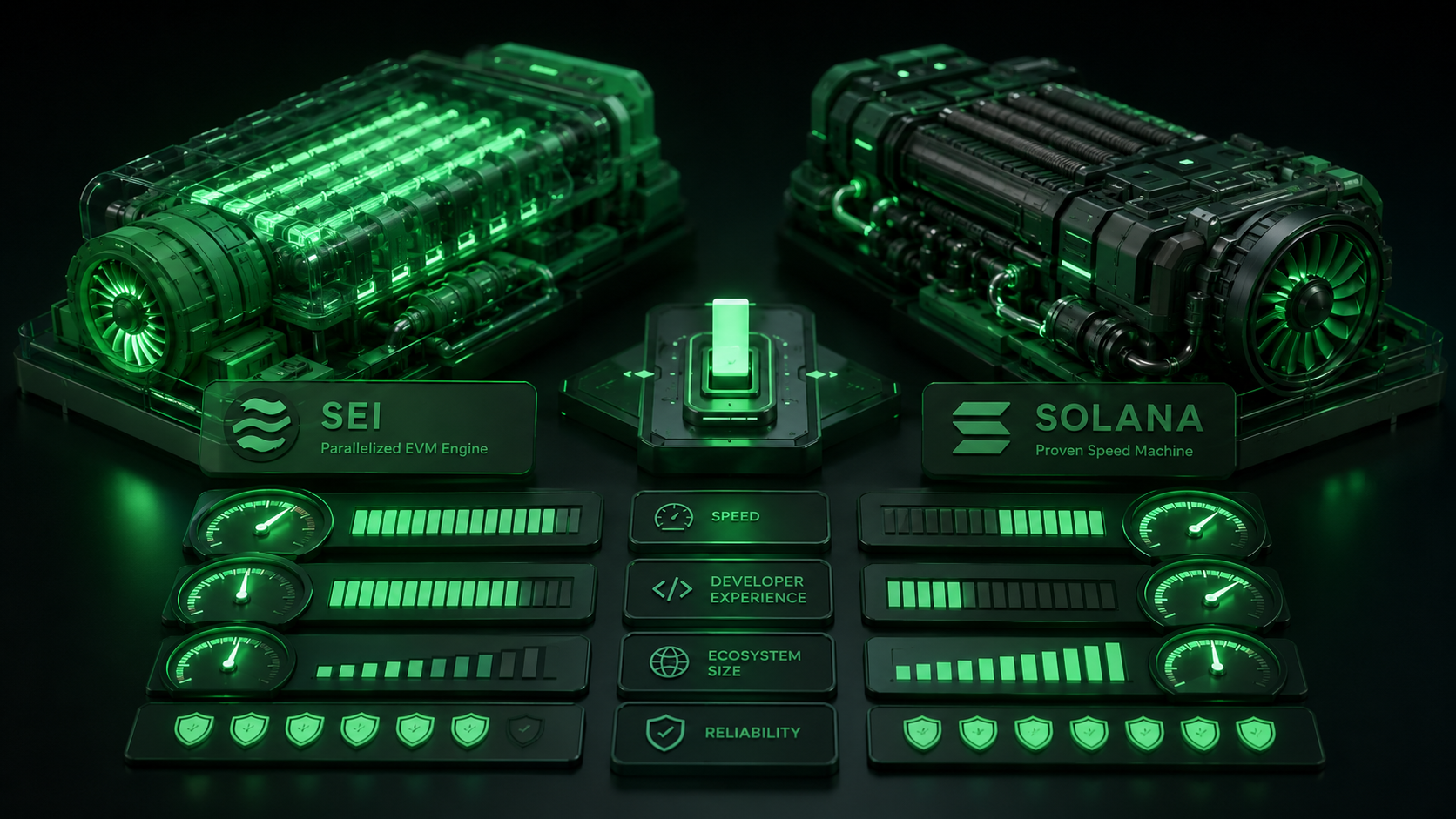
Sei and Solana both pitch themselves as the fastest blockchain for decentralized applications, but they take fundamentally different architectural approaches to achieve that speed. For traders and developers choosing between them, the differences in finality, execution model, ecosystem maturity, and developer experience matter more than raw TPS numbers on a marketing page.
This comparison breaks down where each chain excels, where each falls short, and what these differences mean for anyone looking to trade or build on either network.
Architecture and Performance
Both chains achieve sub-second block times, but the underlying mechanics diverge significantly.
Sei uses optimistic parallel execution within an EVM-compatible environment. Transactions are assumed to be non-conflicting and processed simultaneously, with conflict detection handling the exceptions. The current mainnet delivers 400ms finality and 12,500+ TPS, with the upcoming Giga upgrade targeting 200,000+ TPS. For a detailed breakdown of the Giga architecture, see the Sei Giga upgrade analysis.
Solana uses a custom runtime (Sealevel) with a completely different approach. Its Proof of History (PoH) mechanism creates a verifiable ordering of events before consensus, allowing validators to process transactions without waiting for network-wide agreement on ordering. Solana sustains 2,000 to 4,000 TPS in normal operation and has spiked above 100,000 in stress tests, with 400ms slot times.
| Metric | Sei | Solana |
|---|---|---|
| Block finality | 400ms | ~400ms (slot time) |
| Current real-world TPS | 12,500+ | 2,000–4,000 typical |
| Theoretical max TPS | 200,000+ (post-Giga) | 65,000 (theoretical) |
| Execution model | Optimistic parallel EVM | Sealevel parallel runtime |
| Smart contract language | Solidity + CosmWasm | Rust (via SVM) |
| Consensus | Tendermint-based (DPoS) | Tower BFT + Proof of History |
Source: Chainspect comparison data
Developer Experience
This is where the practical gap between the two chains becomes most apparent.
Sei's EVM compatibility means any Ethereum developer can deploy existing Solidity contracts without modifications. The tooling ecosystem (MetaMask, Hardhat, Foundry, Remix) works out of the box. For teams with existing EVM codebases, moving to Sei requires virtually zero rework.
Solana requires developers to write in Rust using its custom Sealevel runtime and the Anchor framework. While Rust produces highly optimized programs, the learning curve is steep. Solana's developer ecosystem is mature and well-documented, but the barrier to entry remains higher than any EVM chain.
For teams already building on Ethereum or its Layer 2s, Sei offers a migration path that preserves their existing code and tooling. For teams starting fresh or building performance-critical applications from scratch, Solana's native runtime can squeeze out more optimization at the cost of development complexity.
Ecosystem and Adoption
Solana's ecosystem dwarfs Sei's by virtually every measurable metric. DeFi TVL, NFT volume, daily active addresses, and developer count all favor Solana by orders of magnitude. Solana hosts major protocols like Jupiter, Raydium, and Marinade, along with a thriving NFT market and an expanding payments infrastructure.
Sei's ecosystem is younger and smaller but growing. The network has processed over five billion transactions across 90+ million wallets. Its DeFi applications are concentrated in DEXs and lending protocols that benefit from the chain's speed advantage. Sei's RWA partnerships and gaming focus represent growth vectors that could differentiate it from Solana's consumer-app-heavy ecosystem.
The honest assessment: Solana's network effects are a significant moat. Sei competes on technical merit and EVM compatibility rather than trying to replicate Solana's ecosystem breadth. For SEI price dynamics and how ecosystem growth factors into valuation, see the dedicated price analysis.
Reliability and Track Record
Solana's outage history is well-documented. The network experienced multiple prolonged outages in 2022 and 2023, though stability has improved considerably since then. The Firedancer validator client (developed by Jump Crypto) adds client diversity that should reduce future outage risk.
Sei, being a newer network, hasn't been tested under the same volume conditions that caused Solana's failures. The Cosmos SDK foundation provides some battle-tested reliability from the broader Cosmos ecosystem, but Sei's specific parallel execution layer hasn't faced the kind of extreme congestion events that exposed Solana's vulnerabilities.
Neither chain can claim perfect reliability, and both are actively working on resilience improvements.
Which Chain Fits Which Use Case
Choose Sei if: You're building EVM-compatible DeFi applications that need sub-second finality, you want to deploy existing Solidity contracts without rewrites, or you're interested in the RWA and institutional finance use cases that benefit from the chain's speed and Ethereum Pectra-era compatibility. Sei is also worth exploring for traders who want to understand a chain with significant technical upside that the market hasn't fully priced in. Check the best SEI wallets to get set up.
Choose Solana if: You need access to the deepest DeFi liquidity outside of Ethereum, you're building consumer-facing applications where ecosystem size matters, or you're comfortable with Rust development and want the performance benefits of a custom runtime.
Parallel Paths in a Multi-Chain World
Sei and Solana aren't competing for identical users. Sei targets the EVM-native developer and trader who wants Ethereum compatibility with dramatically better performance. Solana targets builders and users who prioritize raw ecosystem scale and are willing to work within its custom development environment.
Both chains will likely coexist and serve different segments of the market. For traders, holding positions in both ecosystems is a way to maintain exposure to different growth trajectories without betting that one approach wins entirely.
Trade SEI spot or SEI perpetual futures on LeveX. Explore more comparisons and guides in the Crypto in a Minute series.