
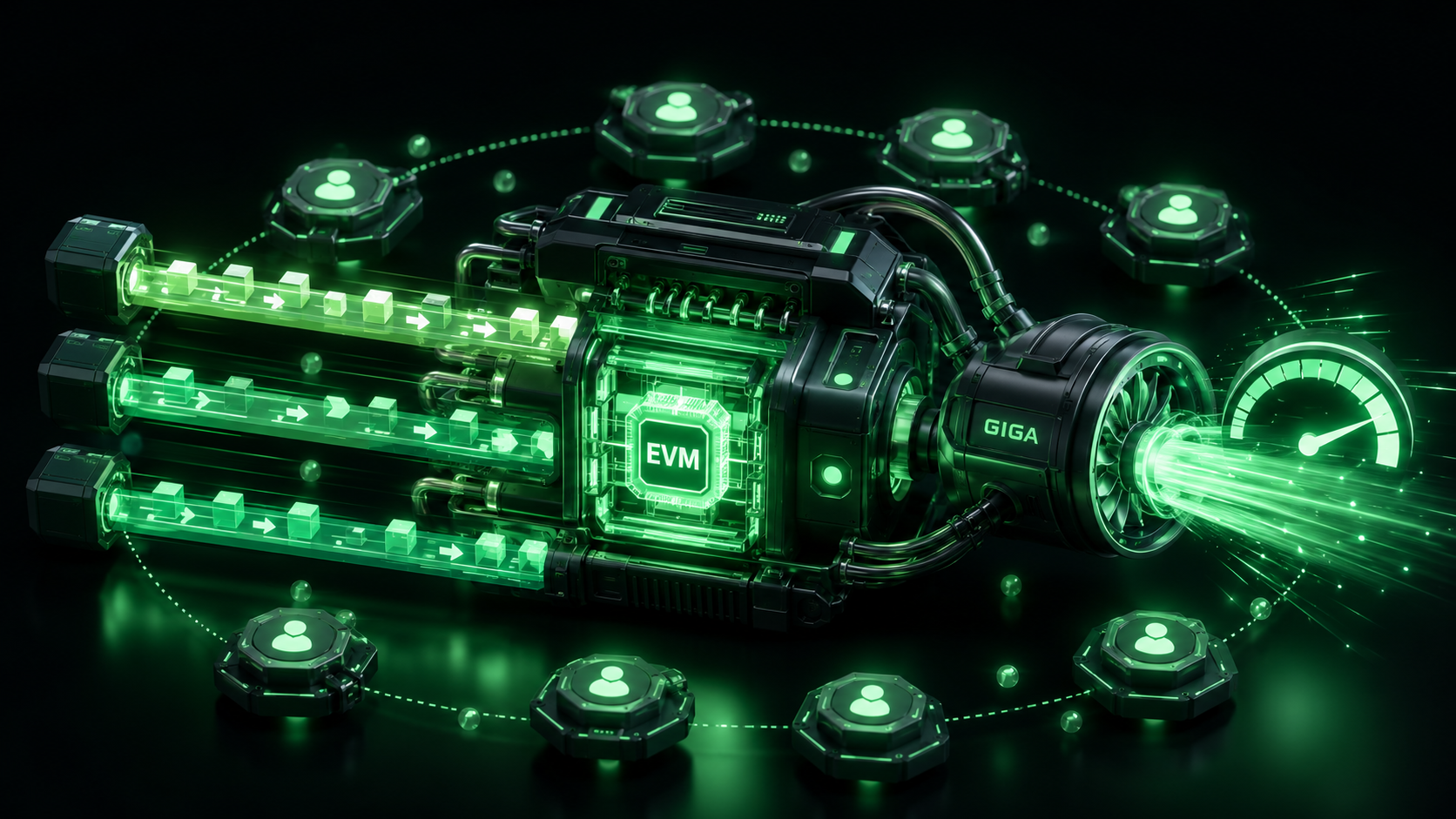
Sei processes transactions at speeds that most Layer 1 blockchains can only promise on a roadmap. With 400-millisecond finality and throughput exceeding 12,500 transactions per second, this parallelized EVM chain has quietly grown into one of crypto's most technically ambitious infrastructure plays, attracting over 90 million wallets and processing more than five billion transactions since launch.
Founded in 2021 by Jay Jog (formerly of Robinhood) and Jeff Feng (formerly of Goldman Sachs and Coatue Management), Sei Labs set out to build a blockchain purpose-built for trading and financial applications. The project raised over $30 million from investors including Jump Crypto, Multicoin Capital, Coinbase Ventures, and Delphi Digital.
How Sei's Parallel Execution Works
Traditional EVM blockchains like Ethereum process transactions sequentially, one after another. If 1,000 trades hit the network simultaneously, they wait in line. Sei rethinks this entirely by processing independent transactions at the same time through optimistic parallelization.
The system assumes transactions won't conflict and processes them in parallel by default. When a conflict does occur (two transactions trying to modify the same state), Sei detects it and re-executes only the conflicting pair. For the vast majority of transactions, this means near-instant processing with no wasted computation.
What makes this practical for developers
Any existing Ethereum smart contract can be deployed on Sei without code changes. Sei's EVM runs natively on Geth, meaning contracts built for Ethereum's Pectra upgrade and beyond work without modification. The chain imports Geth (Go Ethereum's virtual machine implementation) natively, so developers bring their audited contracts, tools, and workflows over directly. There's no need to learn a new programming language or rewrite existing code.
Sei also supports CosmWasm execution alongside EVM, and both environments can communicate with each other seamlessly. A DeFi protocol built in Solidity can interact with a CosmWasm-based oracle on the same chain, within the same block.
Sei V2 and the EVM Transition
Sei launched initially as a Cosmos-based chain optimized for decentralized exchange orderbooks. The V2 upgrade, which went live in 2024, marked a pivotal shift by introducing full EVM compatibility while preserving the chain's Cosmos foundations.
| Feature | Before V2 | After V2 |
|---|---|---|
| Smart contract support | CosmWasm only | CosmWasm + EVM |
| Ethereum contract deployment | Required rewrites | Deploy without changes |
| Execution model | Sequential | Parallel (optimistic) |
| Storage layer | Standard Cosmos | SeiDB (optimized) |
The V2 upgrade also introduced SeiDB, a rebuilt storage layer designed to reduce state bloat and improve read/write performance under heavy load. For applications like decentralized exchanges and lending protocols that depend on rapid state updates, this translates to lower latency and reduced costs per operation.
The SEI Token
SEI serves as the native asset powering the entire network. It has a fixed maximum supply of 10 billion tokens, with approximately 6.7 billion currently in circulation (67% of total supply). All remaining tokens will be fully vested by August 2027.
The token fulfills four core functions across the ecosystem:
- Transaction fees: Every operation on Sei requires SEI for gas, keeping the network spam-resistant while maintaining costs well below one cent per transaction, a fraction of typical Ethereum gas fees.
- Staking and validation: SEI holders can delegate tokens to validators through the network's Delegated Proof of Stake (DPoS) mechanism, earning rewards proportional to their stake. The unbonding period is 21 days.
- Governance: Token holders vote on protocol upgrades, parameter changes, and treasury allocations.
- Collateral and liquidity: SEI functions as native collateral across DeFi applications built on the network, from lending markets to perpetual futures protocols.
For a deeper look at the token's supply schedule and distribution mechanics, the SEI tokenomics breakdown covers vesting timelines and inflation dynamics in detail.
Sei Giga: The Next Performance Leap
The upcoming Sei Giga upgrade targets a dramatic increase in throughput: 5 gigagas per second, enabling over 200,000 TPS while maintaining sub-400ms finality. Three architectural changes drive this improvement.
Parallel block proposals allow multiple validators to construct blocks simultaneously rather than waiting for a single proposer. This eliminates one of the remaining bottlenecks in block production.
Multi-proposer consensus distributes the block proposal role across multiple nodes, reducing the risk that a single slow validator delays the entire network.
Asynchronous execution decouples transaction execution from consensus, allowing the chain to process transactions while simultaneously agreeing on the next block. This is the change that enables the largest throughput gains.
The Giga upgrade is expected to land in 2026, and if successful, would position Sei's raw throughput above virtually every other EVM-compatible chain operating today. The full Giga upgrade analysis explores what these changes mean for developers and traders.
Real-World Use Cases
Sei's architecture lends itself naturally to applications where speed and finality matter most.
DeFi and trading: The sub-second finality makes Sei particularly suitable for decentralized exchange orderbooks, perpetual futures, and options protocols where execution speed directly affects user experience and profitability. Multiple DEXs and lending platforms have already deployed on the network.
Real-world assets (RWAs): Sei has partnered with Securitize and other RWA platforms to bring tokenized financial instruments on-chain. The combination of low fees and fast settlement makes it practical to represent assets like treasuries, equities, and real estate on-chain without the friction that makes tokenized assets uncompetitive on slower networks.
Gaming and NFTs: High throughput and low transaction costs make Sei viable for blockchain gaming, where in-game actions need to settle instantly without burdening players with gas fees. Several gaming studios have chosen Sei as their deployment chain for this reason.
Key Risks and Considerations
Sei remains a relatively young network competing against well-established chains with deeper liquidity, larger developer communities, and more battle-tested infrastructure. Solana, Ethereum's Layer 2 ecosystem, and other parallelized EVM projects like Monad all compete for the same developer and user attention.
The token vesting schedule introduces ongoing sell pressure through August 2027, with approximately 112 to 132 million tokens unlocking monthly in the current phase. Traders should factor this supply expansion into any position sizing.
The Giga upgrade, while technically ambitious, hasn't shipped yet. The gap between promised performance and delivered performance is where many blockchain projects stumble. Until Giga is live and tested under real-world load, its throughput claims remain projections rather than proven capabilities.
Frequently Asked Questions
Is Sei compatible with Ethereum? Yes. Since the V2 upgrade, Sei runs a full EVM environment powered by Geth. Any Solidity smart contract can be deployed on Sei without modifications, and popular tools like MetaMask, Hardhat, and Foundry work natively.
How fast is Sei compared to other blockchains? Sei currently achieves 400ms block finality and over 12,500 TPS. For comparison, Ethereum processes roughly 15-30 TPS, and most Layer 2s achieve finality in minutes rather than milliseconds.
What is the SEI token used for? SEI pays for transaction fees, secures the network through staking, enables governance voting, and serves as collateral across DeFi applications on the network.
Can I stake SEI? Yes. SEI holders can delegate tokens to validators through platforms like Compass and Keplr wallets and earn staking rewards. The unbonding period is 21 days, and there is no minimum stake requirement.
Sei's Place in the Layer 1 Race
Sei occupies a specific niche: an EVM-compatible chain optimized for speed-sensitive financial applications. The combination of parallel execution, instant finality, and seamless Ethereum compatibility gives it a technical edge in use cases where milliseconds matter, from DeFi trading to RWA settlement to gaming.
The project's trajectory depends on whether the Giga upgrade delivers on its throughput promises and whether the ecosystem can attract enough developers and liquidity to compete with larger chains. With over 90 million wallets and five billion processed transactions, the foundation exists. The question is whether technical capability converts into sustained adoption.
LeveX offers SEI spot trading and SEI perpetual futures for traders looking to take a position. Explore more token guides in the Crypto in a Minute series for similar deep dives into trending projects.