
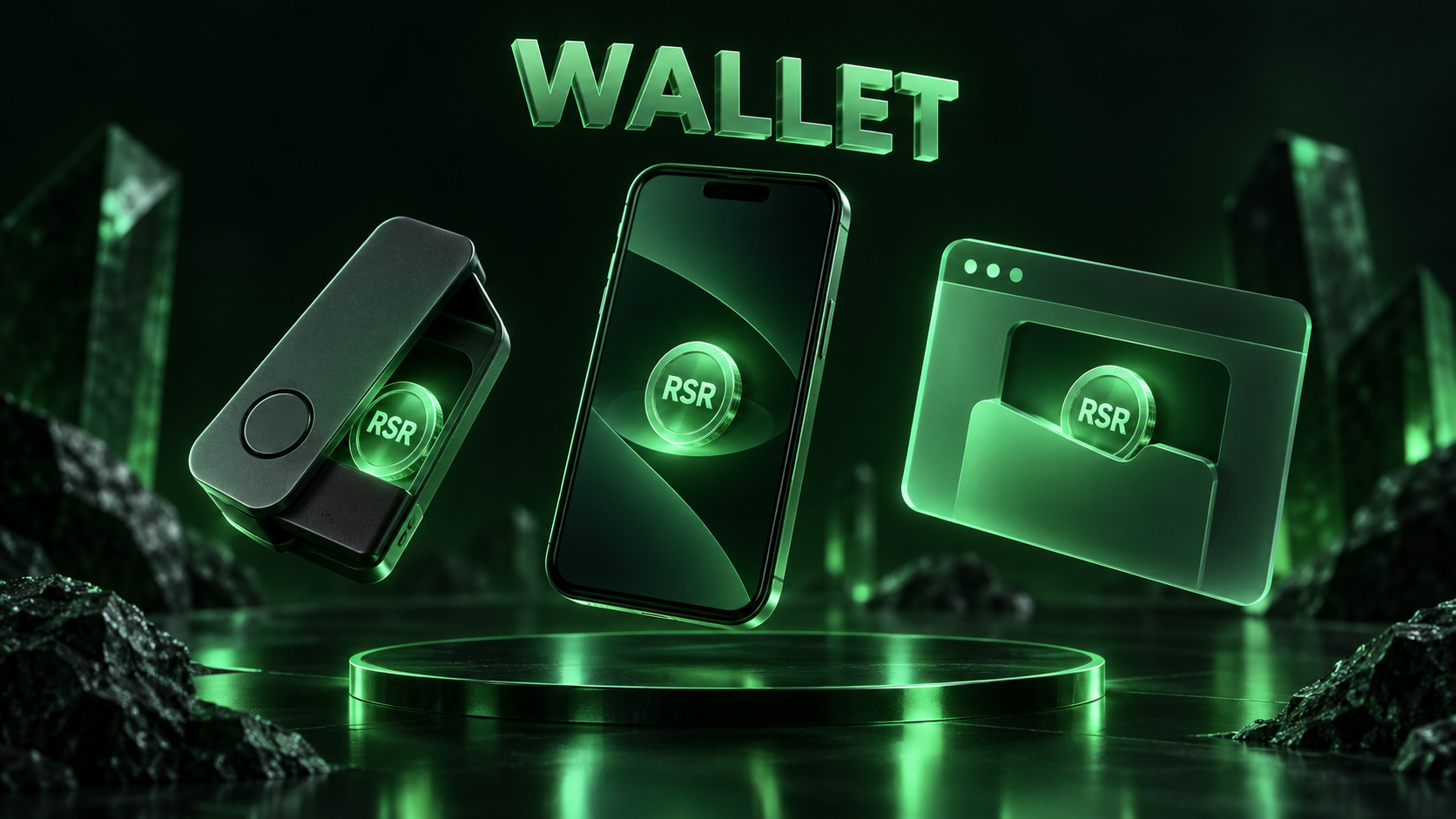
The best RSR wallets in 2026 are MetaMask and Rabby for everyday use and Reserve app access, Ledger and Trezor hardware wallets for long-term storage, and Safe for teams or large holders who want multi-signature control. Because Reserve Rights (RSR) is an ERC-20 token, any wallet that handles Ethereum tokens can hold it. The real choice is about how you plan to use your RSR.
Someone who wants to stake behind a Yield DTF needs a wallet that connects smoothly to the Reserve app. Someone holding for years needs keys that never touch the internet. The comparison below sorts the options by those jobs.
RSR Wallets at a Glance
| Wallet | Type | Networks for RSR | Best for |
|---|---|---|---|
| MetaMask | Browser and mobile hot wallet | Ethereum, Base, BNB Chain | Beginners, Reserve app access |
| Rabby | Browser and mobile hot wallet | Ethereum, Base, BNB Chain | DeFi users who want transaction previews |
| Ledger | Hardware wallet | Ethereum and EVM chains | Long-term holders who stake occasionally |
| Trezor | Hardware wallet | Ethereum and EVM chains | Open-source-minded cold storage |
| Safe | Smart contract multisig | Ethereum, Base and others | Teams, DAOs and large positions |
All five are self-custody options, meaning you hold the keys and nobody can freeze or recover your funds for you. That is a strength and a responsibility. The ethereum.org wallet finder lets you filter these and other Ethereum wallets by feature if you want to compare further.
Check the Network Before Anything Else
RSR is native to Ethereum, where its official token contract is listed on Etherscan. Bridged versions exist on networks where Reserve DTFs run, including Base. They are separate tokens on separate chains, and they only work with apps on that chain.
This matters in two moments. When you withdraw RSR from an exchange, choose the network your wallet is set up to receive. When you add RSR to a wallet manually, use the contract address for that specific network, copied from an official source. A token sent on the wrong network is not lost forever in every case, but recovering it is slow and sometimes impossible. Our guide to wallet addresses covers how addresses and networks fit together.
Hot Wallets for Using RSR
MetaMask
MetaMask is the most widely supported Ethereum wallet, which makes it the safest bet for connecting to the Reserve app, vote-locking RSR or minting a DTF. It runs as a browser extension and a mobile app, supports custom networks such as Base and BNB Chain, and pairs with Ledger and Trezor so you can sign with a hardware device while using MetaMask's interface.
Rabby
Rabby is built for DeFi users. Before you sign anything, it simulates the transaction and shows what will leave and enter your wallet, which helps catch malicious approvals. It switches networks automatically based on the site you visit. For RSR stakers who interact with staking contracts often, that preview is a practical safety feature.
Both are hot wallets, so their keys live on an internet-connected device. Keep only the RSR you actively use in them.
Cold Storage and Multisig for Larger Holdings
Ledger and Trezor hardware wallets
Ledger and Trezor keep your private keys on a dedicated device that signs transactions offline. You can still stake or vote by connecting the hardware wallet to MetaMask or Rabby, then confirming each action on the device screen. The added step is small compared with the protection against malware and phishing.
Ledger offers Bluetooth models and a broad app ecosystem; Trezor's firmware is open source. Either works well for RSR. The general trade-offs between device storage and app storage are covered in the explainer on cold wallets.
Staking is where cold storage shows its value. Staked RSR can sit locked for weeks while the unstaking delay runs, so the wallet that owns the stRSR position should be one you trust for the long haul. The full staking process, with its slashing and delay risks, is laid out in our guide on how to stake RSR.
Safe for shared or very large positions
Safe is a smart contract wallet that needs several signers to approve each transaction, such as two of three hardware wallets held by different people or stored in different places. It is overkill for a small holding but sensible for funds, DAOs, or anyone whose RSR stake would be painful to lose to a single compromised key. Safe works with the Reserve app through standard wallet connections.
Habits That Keep RSR Safe
- Write your recovery phrase on paper or metal and never type it into a website, chat or cloud note.
- Revoke old token approvals after staking or minting, especially on contracts you no longer use.
- Bookmark the Reserve app and the official docs, and ignore "airdrop" or "claim" links in direct messages.
- Send a small test transfer before moving a large amount between wallets or networks.
Wallet safety also ties into timing. Holders who move RSR to self-custody ahead of governance votes, or before a Burn Gauge result, should plan transfers early. Those votes and the supply changes they can bring are explained in the RSR tokenomics breakdown.
Frequently Asked Questions
Can I store RSR in MetaMask?
Yes. MetaMask supports RSR on Ethereum by default and can add RSR on Base or BNB Chain using the token contract for that network. It is also the most common wallet for connecting to the Reserve app.
Does Ledger support RSR?
Yes. Ledger supports RSR as an Ethereum token. Pair the device with MetaMask or Rabby to view it, stake it or use it in Reserve DTF governance.
Should I keep RSR on an exchange or in a wallet?
Keep RSR on an exchange if you trade it actively and want fast access to spot and futures markets. Move it to a self-custody wallet if you plan to stake, vote or hold long term.
Match the Wallet to the Plan
Choose a wallet by what you will do with your RSR. Active stakers and voters need a reliable hot wallet, ideally backed by a hardware device. Long-term holders need cold storage. Large holders should add a multisig. Whichever you pick, the network you select at withdrawal decides where your tokens land. If you are weighing how long to hold before choosing, the scenarios in our RSR price prediction are useful context.
When you are ready to trade instead of store, use the RSR/USDT spot pair or RSRUSDT perpetual futures on LeveX. For quick guides to more tokens, visit Crypto in a Minute.