
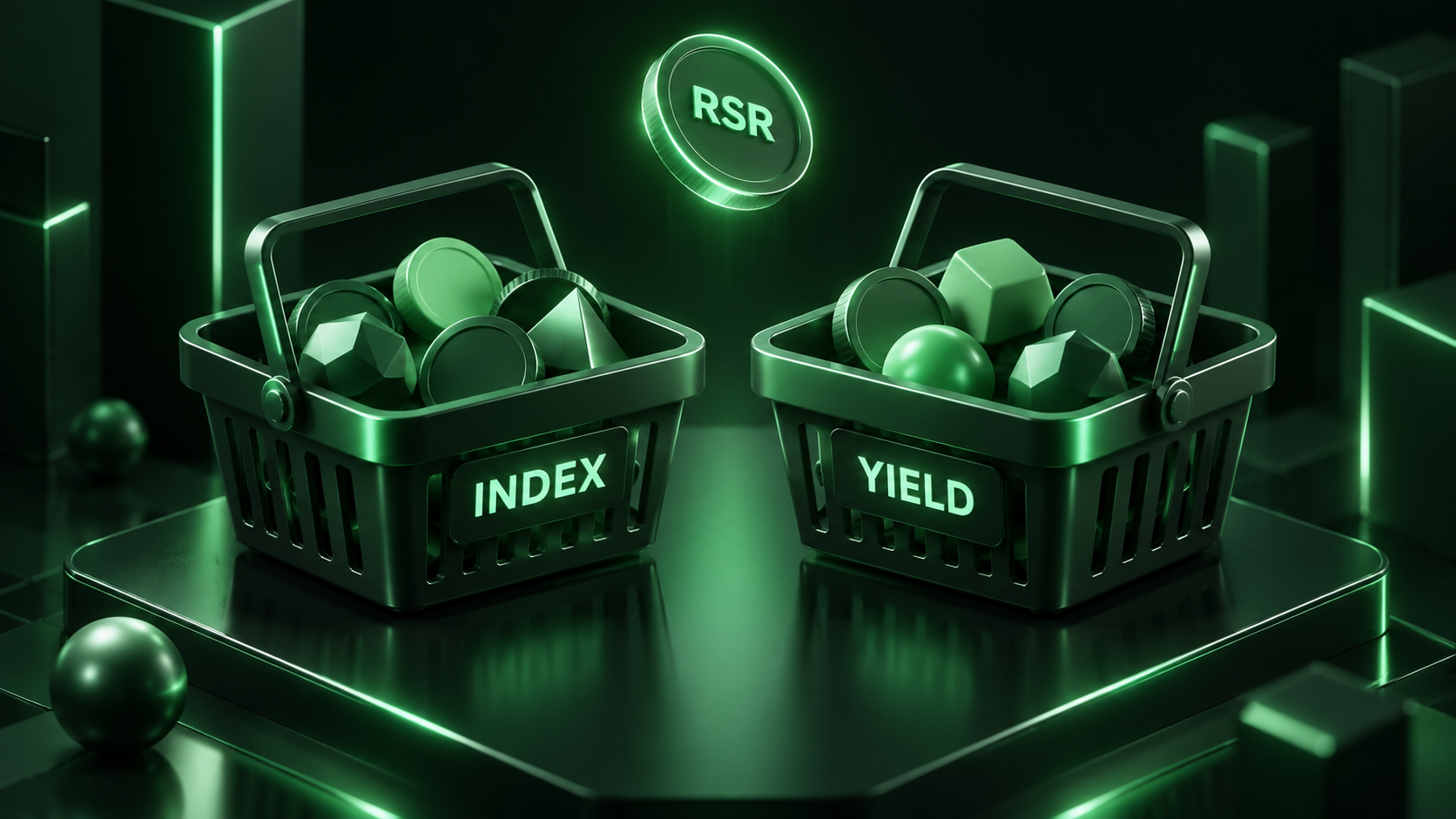
A Reserve DTF (Decentralized Token Folio) is a single ERC-20 token that holds a fully backed basket of other assets, which anyone can mint or redeem at the basket's real-time value. Index DTFs track a set of crypto tokens or tokenized stocks, such as the CMC20 top-20 crypto index or a Magnificent 7 equity basket, while Yield DTFs hold yield-earning collateral like staked ETH. Both run on the Reserve Protocol and are governed or protected by Reserve Rights (RSR).
The easiest way to think about a DTF is as an ETF that lives in a wallet. The differences, though, matter more than the similarity.
DTFs Compared With ETFs and DIY Baskets
| Reserve Index DTF | Traditional ETF | Buying each token yourself | |
|---|---|---|---|
| Who can issue shares | Anyone, at net asset value | Authorized participants only | Not applicable |
| Trading hours | 24/7 onchain | Exchange hours | 24/7 |
| Custody | Your own wallet | A broker account | Your own wallet |
| Rebalancing | Onchain, by governance vote | Fund manager | You, manually, paying fees each time |
| Typical fees | Mint fee under 1%, annual fee under 5% | Expense ratio | Trading and gas fees |
| Composability | Usable in DeFi as collateral or liquidity | Limited | Each token separately |
The table explains why DTFs exist. A spot Bitcoin ETF gives traditional investors crypto exposure inside the old system. A DTF goes the other way: it brings an index product into crypto, where it can be held, transferred and used in other protocols like any token.
How an Index DTF Works
Minting and redeeming
Index DTFs use what Reserve calls permissionless NAV-based issuance. To mint, a user deposits the underlying assets (or a single asset the app swaps for them) and receives DTF tokens worth the same amount. Redeeming reverses the process. Because anyone can do this at any time, a DTF's market price should stay close to the value of its basket, with arbitrage closing any gap.
Rebalancing
Each DTF has a target allocation and a rebalance schedule. When weights drift or the index changes, governance approves a rebalance and the protocol sells and buys assets through onchain auctions. The AI equity baskets launched in July 2026 rebalance quarterly; the MAG7 basket rebalances every two months to restore equal weights.
Fees and the RSR burn
DTFs charge a mint fee and an annual TVL fee, both collected by creating new DTF shares. According to the Reserve Index Protocol docs, the platform's cut comes off the top and is used to buy and burn RSR, and governance decides where the rest goes. This link between DTF fees and RSR supply is why burn totals, and the quarterly Burn Gauge vote, are central to the RSR tokenomics.
Reserve DTFs You Can Hold Today
Reserve's lineup changed a lot between 2025 and 2026, moving from crypto-only baskets toward tokenized equities:
- CMC20: built with CoinMarketCap on BNB Chain, tracking the CoinMarketCap 20 Index of the largest crypto assets.
- MAG7: equal-weighted exposure to Alphabet, Amazon, Apple, Meta, Microsoft, Nvidia and Tesla.
- BUILDOUT, POWER, ROBOTS, PHOTON and NEOCLOUD: themed baskets around the AI buildout, from power producers and robotics firms to photonics and data-center capacity.
- ETH+: a Yield DTF holding a diversified mix of liquid staking tokens, protected by staked RSR.
The equity baskets launched on July 9, 2026 hold stocks tokenized through Ondo Global Markets, with market-cap weights capped at 20% per company in most themes. Reserve introduced its index platform in a 2025 blog post and has since added deployments beyond Ethereum and Base.
Where Yield DTFs Fit
Yield DTFs are the older half of Reserve. They began as RTokens, asset-backed tokens that could be designed as stable currencies or as yield baskets, and each one can be protected by RSR stakers who absorb losses if collateral fails. That first-loss model is what makes them different from Index DTFs. The mechanics of providing that protection, including unstaking delays and how stakers earn, are covered in our guide on how to stake RSR.
Yield DTFs grew slowly next to the index side. Most of the new products and fee growth in 2026 came from Index DTFs, which is why the protocol's marketing now leads with baskets of stocks and tokens.
Risks of Holding a DTF
A DTF inherits every risk of its contents and adds a few of its own. Tokenized stock baskets depend on the issuer holding the real shares and on the legal status of those tokens in your jurisdiction. Thinly traded baskets can see their market price drift from their value if few people arbitrage them. Governance can change weights, fees or assets, and the contracts themselves carry smart contract risk.
For RSR holders, the key point is that DTF growth is the only real engine of token demand. Every forecast in our RSR price prediction assumes some level of DTF adoption, and the asset totals in these baskets are the most direct way to test those assumptions.
Frequently Asked Questions
What does DTF stand for in crypto?
DTF stands for Decentralized Token Folio, Reserve's name for an onchain token that represents a fully backed basket of assets. Reserve offers Index DTFs for baskets of tokens or stocks and Yield DTFs for yield-earning collateral.
Do you need RSR to buy a Reserve DTF?
No. You can mint or buy a DTF with the assets or stablecoins the Reserve app accepts. RSR is only needed to stake behind Yield DTFs or vote on Index DTF governance.
Are Reserve DTFs the same as ETFs?
They share the idea of one token holding a basket, but DTFs are issued onchain, trade 24/7, sit in your own wallet and can be minted by anyone at net asset value. They are not registered investment funds.
DTFs Are the Product, RSR Is the Lever
Reserve DTFs put index investing on the same rails as any other token, and the protocol earns a small fee for every dollar held in them. That fee stream, and the RSR it burns, is the clearest line between what Reserve builds and what RSR is worth.
To trade that thesis directly, buy RSR on the LeveX spot market or go long or short with RSR perpetual contracts. The Crypto in a Minute series covers many more tokens in the same short format.