
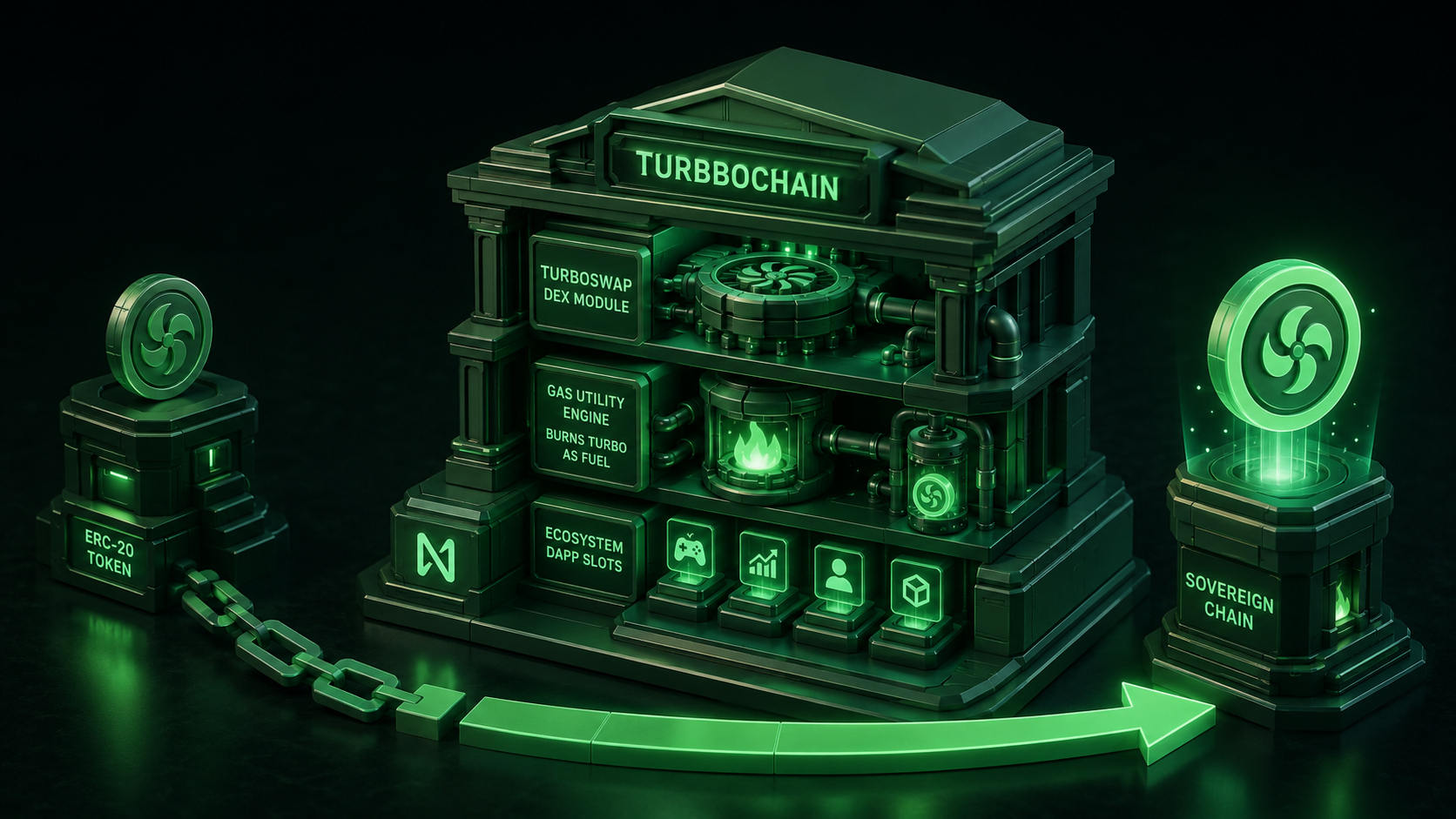
When Aurora Labs launched TurboChain in December 2024, Turbo (TURBO) became one of the few meme coins with a dedicated Layer-1 blockchain. Built using Aurora's Virtual Chain technology on top of NEAR Protocol, TurboChain transforms TURBO from a static ERC-20 token into the gas currency of an entire network. For traders and holders, this infrastructure layer fundamentally changes what TURBO can do and how demand for the token is generated.
How TurboChain Works
TurboChain is a "Virtual Chain," a concept developed by Aurora Labs that lets communities deploy customized blockchains without building infrastructure from scratch. Instead of running its own validator set or consensus mechanism, TurboChain inherits security and finality from NEAR Protocol while maintaining its own execution environment and fee structure.
The practical result: TurboChain offers fast transaction speeds and low fees while TURBO serves as the gas token for all network operations. Every smart contract deployment, token swap, and DeFi interaction on TurboChain requires TURBO to pay gas, creating a utility-driven demand layer that exists independently of speculative trading.
This architecture means TurboChain doesn't compete for Ethereum block space. Ethereum's gas fees can spike during congestion, making small transactions on ERC-20 tokens like TURBO expensive. TurboChain sidesteps this entirely by operating on NEAR's infrastructure, where transaction costs stay consistently low. For developers, the Virtual Chain framework also provides Aurora Cloud tooling for deployment and customization, lowering the barrier to building on TurboChain compared to launching a standalone network from scratch.
TurboSwap and Cross-Chain Trading
TurboSwap launched alongside TurboChain as the ecosystem's native decentralized exchange. What makes TurboSwap relevant beyond the TURBO ecosystem is its cross-chain capability.
TurboSwap supports token swaps across seven networks: Ethereum, NEAR, Bitcoin, Solana, Arbitrum, Base, and Dogecoin. This cross-chain bridge functionality means traders can move assets between major networks through TurboSwap's interface, with TURBO powering the underlying transactions on the TurboChain side.
For TURBO's price dynamics, TurboSwap creates a feedback loop: more trading activity on TurboSwap means more gas consumption, which means more TURBO demand. If TurboSwap captures even a modest share of cross-chain swap volume, the resulting gas demand would be a meaningful factor in TURBO's token economics.
What This Means for TURBO's Value Proposition
Most meme coins derive 100% of their value from sentiment and speculation. TurboChain gives TURBO a second value driver: network utility. The token now serves double duty as both a tradeable meme coin and the functional currency of a blockchain ecosystem.
This dual identity creates interesting dynamics. During meme coin rallies, TURBO benefits from the same sentiment-driven buying pressure as Dogecoin and other meme tokens. During quieter periods, network activity on TurboChain provides a baseline demand floor that pure meme coins lack.
The comparison to Ethereum is instructive, if imperfect. ETH derives value from being the gas token of the largest smart contract platform. TURBO derives gas-token value from TurboChain, a much smaller ecosystem. The question is whether TurboChain grows large enough for gas demand to materially support TURBO's price.
Aurora Labs and the Virtual Chain Vision
TurboChain fits into Aurora Labs' broader plan to deploy 1,000 interconnected Virtual Chains. Each chain serves a specific community or use case while sharing NEAR's underlying infrastructure. This interconnected model means TurboChain can benefit from cross-chain composability as the Virtual Chain network expands.
For TURBO specifically, the Aurora partnership provides ongoing technical support and infrastructure maintenance that a standalone meme coin community would struggle to maintain. The team behind NEAR Protocol and Aurora brings enterprise-grade blockchain engineering to a project that started as a GPT-4 experiment, a combination that few meme coins can claim.
Risks and Limitations
TurboChain is still early. Transaction volumes and unique address counts remain modest compared to established Layer-1 networks. The success of the ecosystem depends on developer adoption, and developers gravitate toward networks with existing user bases and proven demand. TurboChain needs to demonstrate a compelling reason for builders to deploy there rather than on Ethereum, Solana, or other established platforms.
The dependency on NEAR Protocol introduces platform risk. If NEAR experiences technical issues, network outages, or declining adoption, TurboChain inherits those problems. While NEAR has been reliable, this architectural coupling is worth understanding before evaluating TURBO as an investment. Assess whether your wallet supports TurboChain interactions if you plan to use the ecosystem directly, as some providers may not yet support Virtual Chain networks natively, and review the network requirements before connecting.
Trade TURBO on spot markets or explore TURBO perpetual futures on LeveX. Find more blockchain explainers in Crypto in a Minute.