
GPT-4 designed Turbo's (TURBO) tokenomics as part of the original $69 meme coin experiment in April 2023. The AI chose every parameter: total supply, distribution split, and the zero-tax model. Understanding these mechanics matters for anyone trading or holding TURBO, because tokenomics determine how supply pressure and demand interact over time.
The 69 Billion Supply
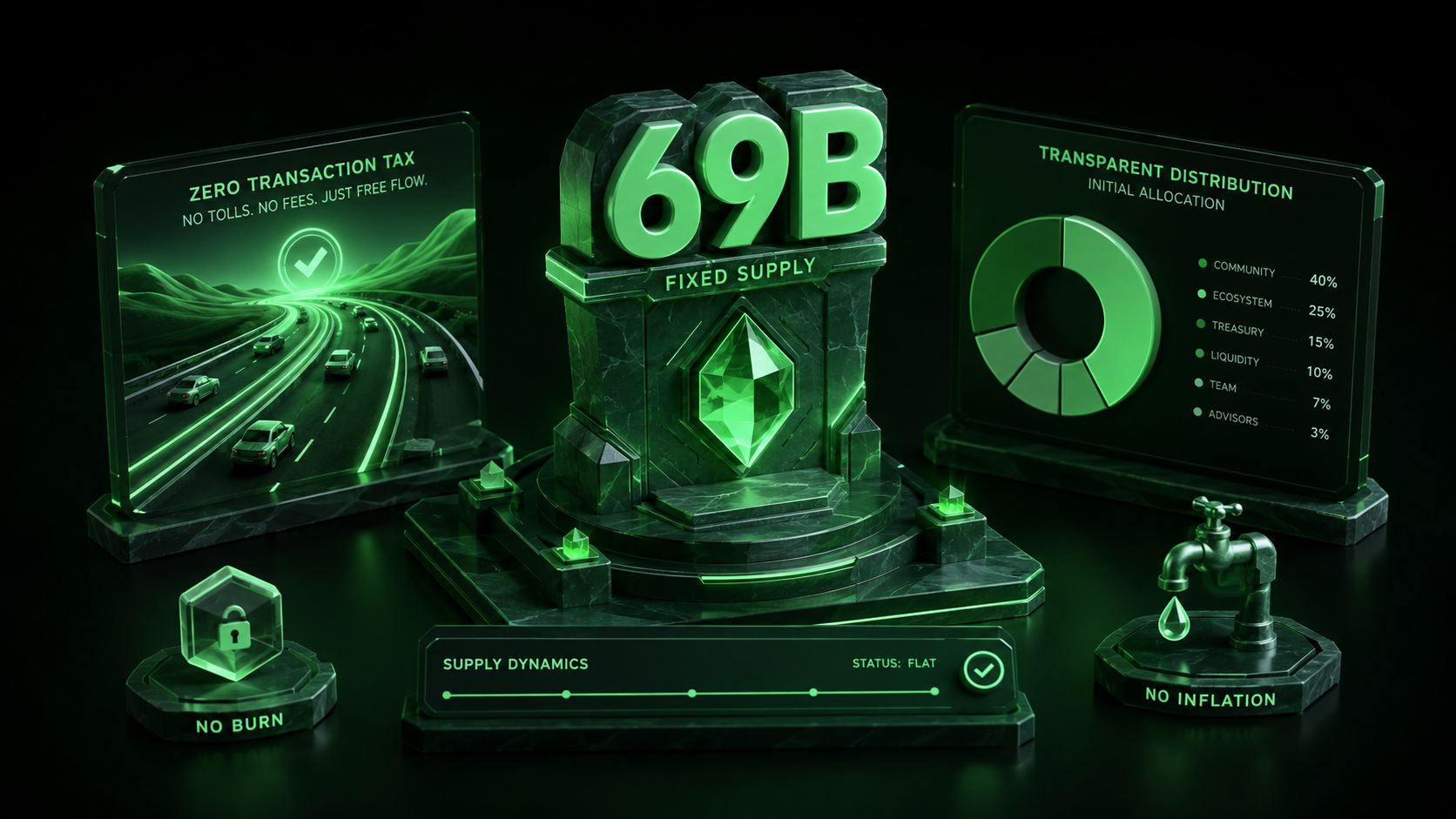
TURBO's total supply is 69 billion tokens, a figure GPT-4 selected to mirror the project's $69 starting budget. As CoinGecko's token profile confirms, all 69 billion were minted at genesis in a single transaction. There is no inflation schedule, no staking emission, no mining reward, and no burn mechanism. The supply number you see today is the supply number you'll see in five years.
This fixed-supply model puts TURBO in the same category as Bitcoin conceptually, though the mechanics differ. Bitcoin releases new supply through mining until its 21 million cap is reached. TURBO started with 100% of its supply already circulating. For traders, this eliminates one major variable: you never need to worry about upcoming token unlocks or vesting schedules diluting your position.
Distribution Breakdown
The initial allocation split TURBO's 69 billion tokens into two pools:
- 60 billion tokens (87%) were distributed through crowdfunding after the initial launch failed due to a bot attack. Participants sent ETH and received proportional TURBO allocations.
- 9 billion tokens (13%) went to Rhett Mankind, the project's creator, as a founder allocation.
No tokens were reserved for a development team, marketing fund, treasury, or advisor pool. This distribution model is unusually lean compared to most crypto projects, where team and ecosystem allocations often represent 20–40% of total supply. According to CoinMarketCap data, the full 69 billion supply has been circulating since launch.
The Founder Wallet Question
The 9 billion token founder allocation (13%) sits in a known wallet. While Mankind transferred project control to the community and the contract was renounced, these tokens remain under the founder's discretion. Large sell-offs from this wallet would create measurable price pressure, particularly given TURBO's market cap.
Traders who track whale wallets can monitor this address for movement. No lockup period or vesting schedule governs these tokens, so the risk is permanent and worth factoring into any position sizing decision.
Zero Transaction Tax
TURBO charges no tax on buys, sells, or transfers. This sounds simple, but its implications for trading are significant.
Many meme coins implement transaction taxes ranging from 2% to 10% per trade, with portions directed to liquidity pools, development funds, or burn mechanisms. These taxes create hidden costs that widen the effective spread and make frequent trading expensive. They also cause price discrepancies between DEX and CEX markets as arbitrageurs factor in the tax cost.
TURBO's zero-tax structure means your execution price is your actual price. This is particularly relevant for futures traders, where the underlying spot price feeds need to be clean and arbitrage-efficient. Tax tokens often create funding rate distortions that zero-tax tokens avoid.
How TURBO Compares to Other Meme Coin Supply Models
TURBO's tokenomics sit at one extreme of the meme coin spectrum. Compare it to the two largest meme coins by market cap:
| Feature | TURBO | DOGE | SHIB |
|---|---|---|---|
| Total Supply | 69B (fixed) | ~148B (inflationary) | 589T (deflationary via burns) |
| New Supply/Year | 0 | ~5B DOGE | 0 (supply decreasing) |
| Transaction Tax | 0% | 0% | 0% |
| Burn Mechanism | None | None | Community burns + Shibarium |
| Contract Status | Renounced | Active dev | Active dev |
Dogecoin inflates at roughly 3.5% annually, requiring constant buying pressure to hold its price. SHIB started with a quadrillion supply and relies on burn mechanisms to reduce it. TURBO's approach is the most static: what exists at launch is all that will ever exist, and no mechanism can change that.
For traders, this simplicity is an advantage. Modeling TURBO's supply dynamics requires tracking exactly one variable: demand.
Implications for Long-Term Value
Fixed supply creates a clear relationship between adoption and price. If TurboChain's use of TURBO as a gas token generates sustained demand, and if the community continues to expand, the math favors price appreciation because supply cannot adjust upward to absorb new demand.
The flip side is equally important. Without inflationary incentives (staking rewards, mining emissions), there's no passive reason for holders to keep tokens locked up. If sentiment turns negative, TURBO's entire circulating supply is immediately available to sell. The best wallets for holding TURBO can help manage custody, but they don't change the underlying liquidity dynamics.
Evaluating whether TURBO is a good investment starts with understanding these tokenomics. The fixed supply and zero-tax structure provide a clean foundation, but the founder wallet concentration and absence of lockups add risk that pure supply metrics don't capture.
Trade TURBO on spot markets or explore TURBO perpetual futures on LeveX. Discover more token deep dives in Crypto in a Minute.