

Our base case puts SUSHI between $0.15 and $0.35 by 2030, with a bear case near $0.08 and a bull case around $1 if SushiSwap's fee revenue grows much faster than its token supply. Those ranges start from a price of about $0.19 in early November 2026, when SUSHI ranked around #413 by market cap and sat roughly 36% above its all-time low of $0.1395.
The single number that shapes every scenario is supply. SUSHI has no hard cap, and governance approved annual emissions of up to 5% in December 2025, so the token needs real demand growth just to stand still.
Where SUSHI Trades Now
As of November 2026, CoinGecko lists SUSHI at about $0.19, with a market cap near $54 million, about 286.75 million tokens circulating and roughly $2.6 million of daily volume. The token has lost about 59% over the past year and trades more than 99% below its $23.38 peak from March 2021.
The recent path matters for context. SUSHI traded near $0.31 around the December 2025 emissions vote, near $0.26 when weekly Strategic Reserve buybacks began in September 2026, and slid back below $0.20 by late October. The buybacks have not reversed the trend so far, which says something about their size relative to emissions.
What Forecasters Are Saying
Third-party forecasts for SUSHI disagree wildly, which is typical for a small-cap DeFi token. The spread below reflects each site's assumptions more than any consensus.
| Source | 2026 view | 2030 view | Method |
|---|---|---|---|
| Traders Union | Bearish monthly path | ~$0.14 to $0.15 | Trend extrapolation |
| Bitscreener | Not stated | $0.14 to $2.72 | Algorithmic range |
| Coinlore | Not stated | ~$2.07 | Algorithmic model |
| CoinPedia | $0.055 to $0.88 | High of $10.38 | Analyst scenario |
The $10 targets assume a return to 2021-style DeFi valuations without accounting for a supply that has grown from a 250 million design cap to over 290 million. Anyone using these numbers should check the assumptions before the headline figure.
Three Scenarios for 2030
These scenarios assume emissions run at or near the 5% ceiling, which would lift circulating supply to roughly 340 to 350 million by 2030.
Bear case: $0.06 to $0.10
Fee revenue stays flat or shrinks, emissions continue and buybacks remain small. Liquidity providers keep selling their SUSHI rewards, and Sushi loses share to larger DEXs on the chains that matter most. At $0.08 the fully diluted value would be under $30 million, a level small DeFi tokens with shrinking usage often reach.
Base case: $0.15 to $0.35
Sushi holds its niche as a multichain router, Solana and newer chains add some volume, and buybacks roughly offset part of the new supply. Market cap lands between $50 million and $120 million, close to where it is now on the low end and about double on the high end. This is the most likely path if nothing structural changes.
Bull case: $0.80 to $1.20
This needs two things together: a broad DeFi recovery and a product that grows Sushi's revenue sharply, such as a successful launch of the long-planned Susa perpetuals exchange. A $1 price on 345 million tokens implies a market cap near $345 million, well below the 2021 peak but far above today. It is possible, and it is the least likely of the three.
What Will Move SUSHI From Here
Emissions are the main headwind. The December 2025 vote allowed up to 14 million new SUSHI a year, and The Defiant noted that one wallet decided the result. A future vote to cut emissions would be the most direct bullish catalyst, while a vote to keep them at the ceiling would confirm the bear case's supply math. Our explainer on crypto token buybacks shows how other protocols have tried to balance emissions against fee-funded purchases.
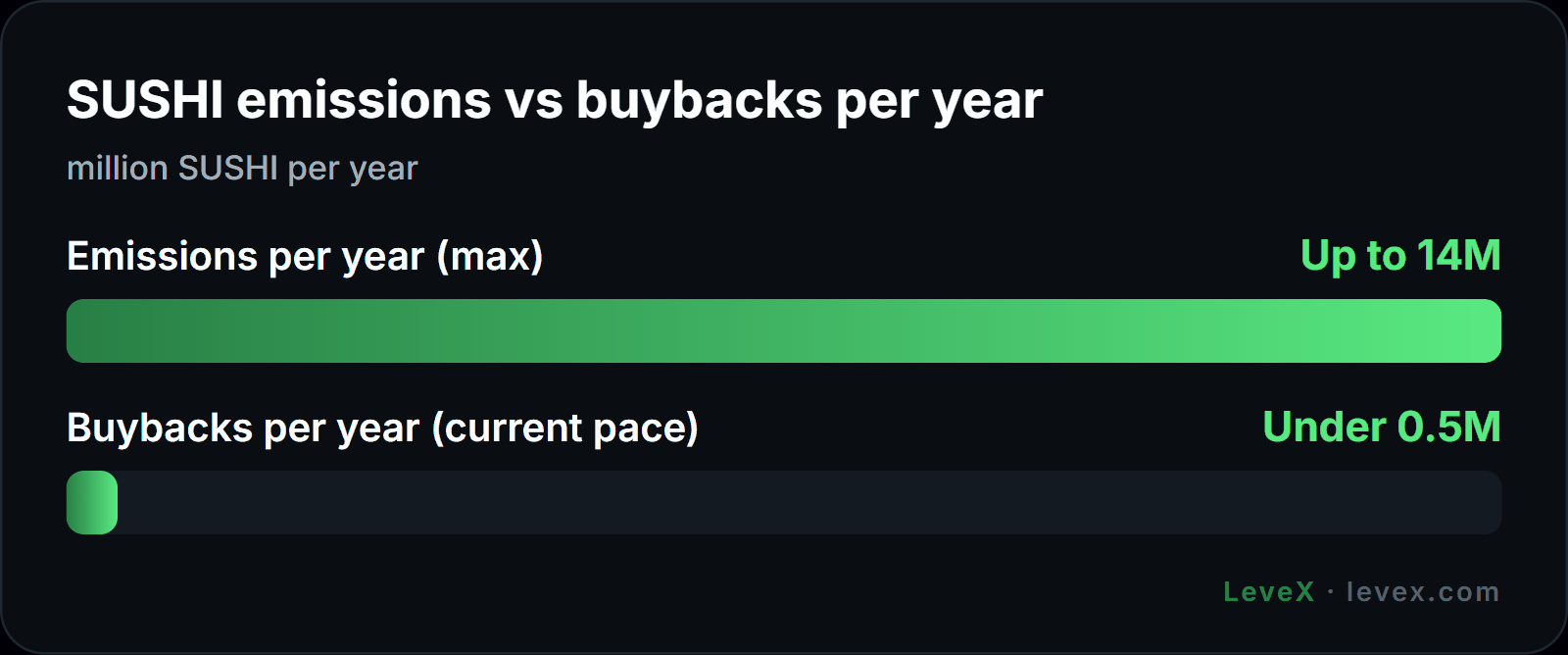
Buybacks are the offset. The fourth weekly Strategic Reserve purchase in late September 2026 bought about 9,054 SUSHI, taking the running total to around 37,840 tokens. At that pace, buybacks absorb under 0.5 million tokens a year against emissions of up to 14 million.
Volume and chain growth come third. Sushi's February 2026 Solana launch and its role as a core DEX on Katana give it new venues, but each pool needs liquidity deep enough to attract real trades. A broader DeFi cycle, led by larger tokens such as Uniswap, would lift SUSHI as well, since small DEX tokens tend to amplify sector moves in both directions.
Frequently Asked Questions
Can SUSHI reach $1 again?
SUSHI reaching $1 would need a market cap of roughly $300 million to $350 million, about six times today's level. It is possible in a strong DeFi cycle with rising Sushi revenue, but it is the bull case, and emissions make it harder each year.
Can SUSHI reach $10?
A $10 SUSHI would mean a market cap above $3 billion on today's supply, larger than at almost any point since 2021. No realistic revenue path for Sushi supports that valuation by 2030.
Is SUSHI a good investment in 2026?
SUSHI is a high-risk small-cap token with an inflationary supply and a shrinking market share, offset by a working product and new buybacks. It suits traders who want exposure to a DeFi recovery and can size the position for a further fall.
Reading the SUSHI Outlook
SUSHI's price path comes down to a race between new tokens and new fees. Until buybacks or a cut in emissions close that gap, the base case of $0.15 to $0.35 by 2030 looks more realistic than the double-digit targets some sites publish.
Traders who want to act on a view can buy outright on the SUSHI/USDT spot market or take either side of the trade with SUSHI perpetual futures on LeveX. For quick primers on other DeFi tokens, visit Crypto in a Minute.