

Our base case puts SSV near $2.80 by the end of 2026 and around $5.50 by 2030, with a realistic range from about $1.20 on the downside to $12 in a strong bull market. Those numbers rest on one question above all others: how much ETH fee income the SSV Network sends to token stakers now that the 2026 redesign has tied the token to that revenue.
SSV traded near $3 in early October 2026, which is more than 90% below its 2024 highs. The rest of this article explains what moves the price, how each scenario is built, and what would invalidate it.
Where SSV Stands in October 2026
As of October 2026, CoinGecko and other aggregators place SSV between roughly $2.50 and $3.20, with about 14.7 million tokens circulating and a market value in the $40 million to $50 million range. That valuation is small for a protocol that, by its own count, secures several million ETH across more than 110,000 validators.
The gap between the token's value and the network's scale is the central tension for anyone forecasting SSV. A market cap under $50 million against billions of dollars in secured ETH looks cheap only if a meaningful share of the fees from that ETH reaches token holders. Until April 2026, it did not reach them directly at all.
What Drives the SSV Price After the Fee Switch
ETH fee revenue reaching stakers
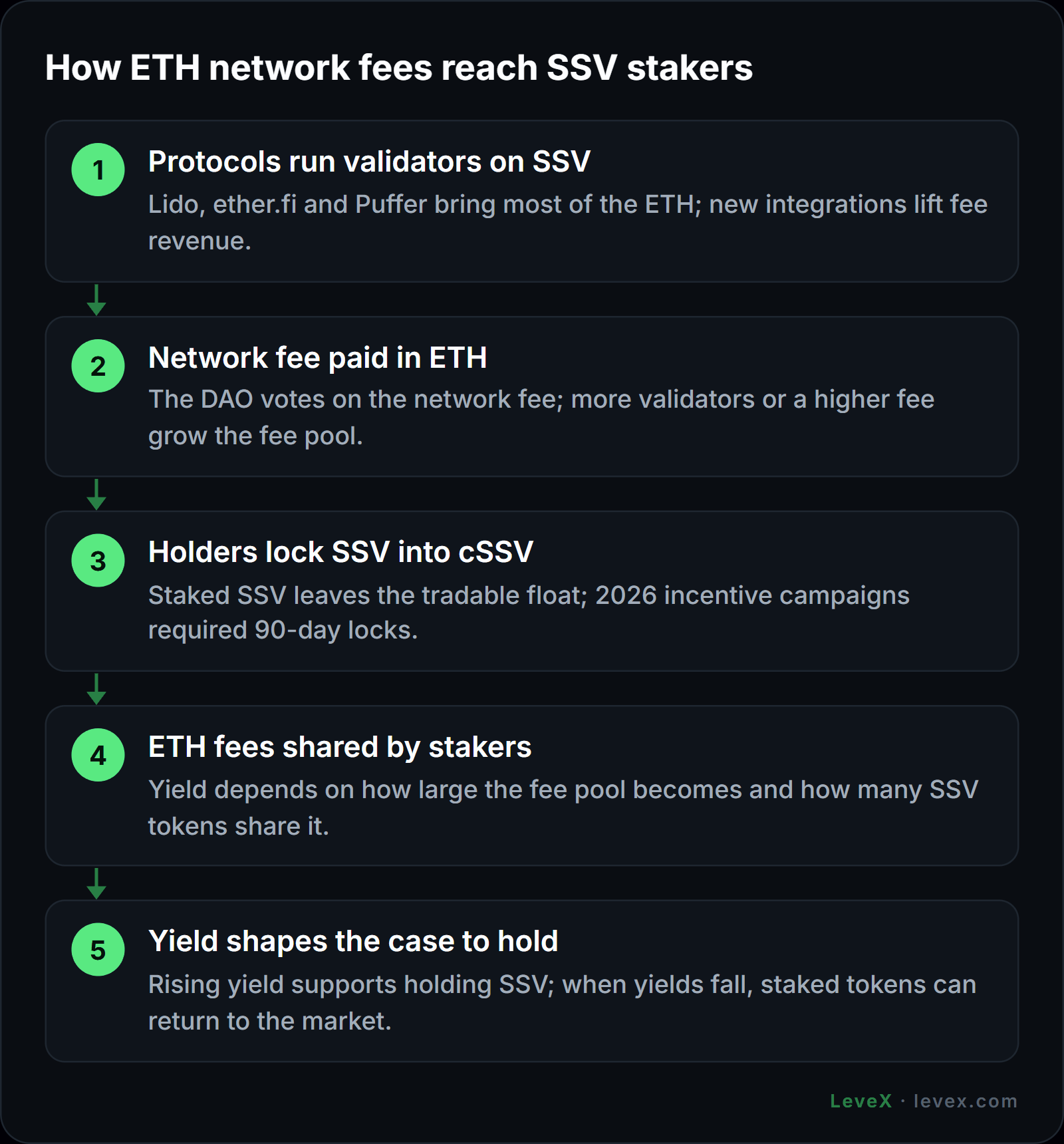
The April 2026 launch of cSSV, reported in a release carried by The Block, turned SSV into a claim on network fees paid in ETH. Price now depends on how large that fee pool becomes and how many SSV tokens share it. If the DAO raises the network fee or the network adds validators, staking yield rises and so does the case for holding the token.
Adoption by staking protocols
Most of the ETH on SSV comes from a handful of liquid staking and restaking protocols, including Lido, ether.fi and Puffer. New integrations lift fee revenue. A single large partner moving validators to a different provider would cut it sharply.
Staking participation and liquid supply
Every SSV locked into cSSV leaves the tradable float. Incentive campaigns in 2026 required 90-day locks, which tightened supply during the summer. When those locks expire, some of that supply may return to the market, so watch staking totals around unlock dates.
Ethereum's own cycle
SSV is an infrastructure token for Ethereum staking, so its fee income is priced in ETH. A rising ETH price raises the dollar value of SSV staking rewards even if the network does not grow, and an ETH downturn has the opposite effect.
SSV Price Scenarios for 2026 to 2030
These ranges are scenario estimates built from the drivers above. They are not guarantees, and small-cap tokens can move far outside any range.
| Year | Bear case | Base case | Bull case |
|---|---|---|---|
| End of 2026 | $1.80 | $2.80 | $4.20 |
| 2027 | $1.50 | $3.50 | $6.00 |
| 2028 | $1.50 | $4.20 | $8.00 |
| 2030 | $1.20 | $5.50 | $12.00 |
The bear case assumes ETH fee revenue stays modest after the incentive campaigns end, a large staking partner reduces its SSV usage, and holders who locked SSV for the boost programs sell when their locks expire. The base case assumes steady validator growth, gradual fee increases set by the DAO, and staking yield that keeps a large share of supply locked. The bull case needs several things at once: a strong ETH market, new institutional staking clients, and meaningful revenue from Based Applications, the add-on services validators can secure through SSV 2.0.
Many statistical forecasting sites published 2026 targets near $2, mostly by extending recent price trends. That method ignores the fee switch, which is the biggest change to SSV's economics since launch, so we give those models little weight.
What Could Break the Outlook
Three risks would push SSV toward or below the bear case. The first is competition: Obol offers similar distributed validator technology and already shares Lido's DVT module with SSV. The second is execution risk in the new staking system, which relies on smart contracts and DAO-elected oracles that report validator balances. The third is the cooling of restaking across the market in 2026, which weakened one of the growth stories behind SSV 2.0.
The signals that would tell you which scenario is playing out are public. Watch the total SSV staked into cSSV, the ETH rewards paid per staked token each month, the network fee the DAO votes on, and the validator counts each major partner reports. A rising reward per token with stable or growing staking totals points toward the base or bull case. Falling rewards after the boost campaigns end point the other way.
Liquidity cuts both ways as well. A token with a market cap this small can double on modest buying, and it can halve just as fast when sentiment turns.
SSV Price FAQ
Can SSV reach $10?
SSV reaching $10 would mean a market cap of roughly $150 million at today's circulating supply. That is possible in our bull case by around 2030, but it would require strong ETH prices and much larger fee revenue than the network produced in 2026.
Will SSV return to its all-time high?
A return to the 2024 peak would require a market value more than twenty times higher than in October 2026. That outcome sits well beyond our bull case for this decade.
Does staking SSV affect the price?
Staking removes SSV from the tradable supply and gives holders a reason to keep tokens, which can support the price while rewards are attractive. When lockups end, or when yields fall, staked tokens can return to the market and add selling pressure.
Reading the SSV Outlook
SSV's price story changed in 2026 from a speculative governance token to a claim on Ethereum staking fees. Our base case expects slow, uneven gains as fee revenue builds, while the downside scenario reflects how much the network depends on a few large partners.
Track the SSV/USDT pair on the LeveX spot market, or position for either scenario with SSVUSDT perpetual futures. More plain-English token guides are waiting in Crypto in a Minute.