
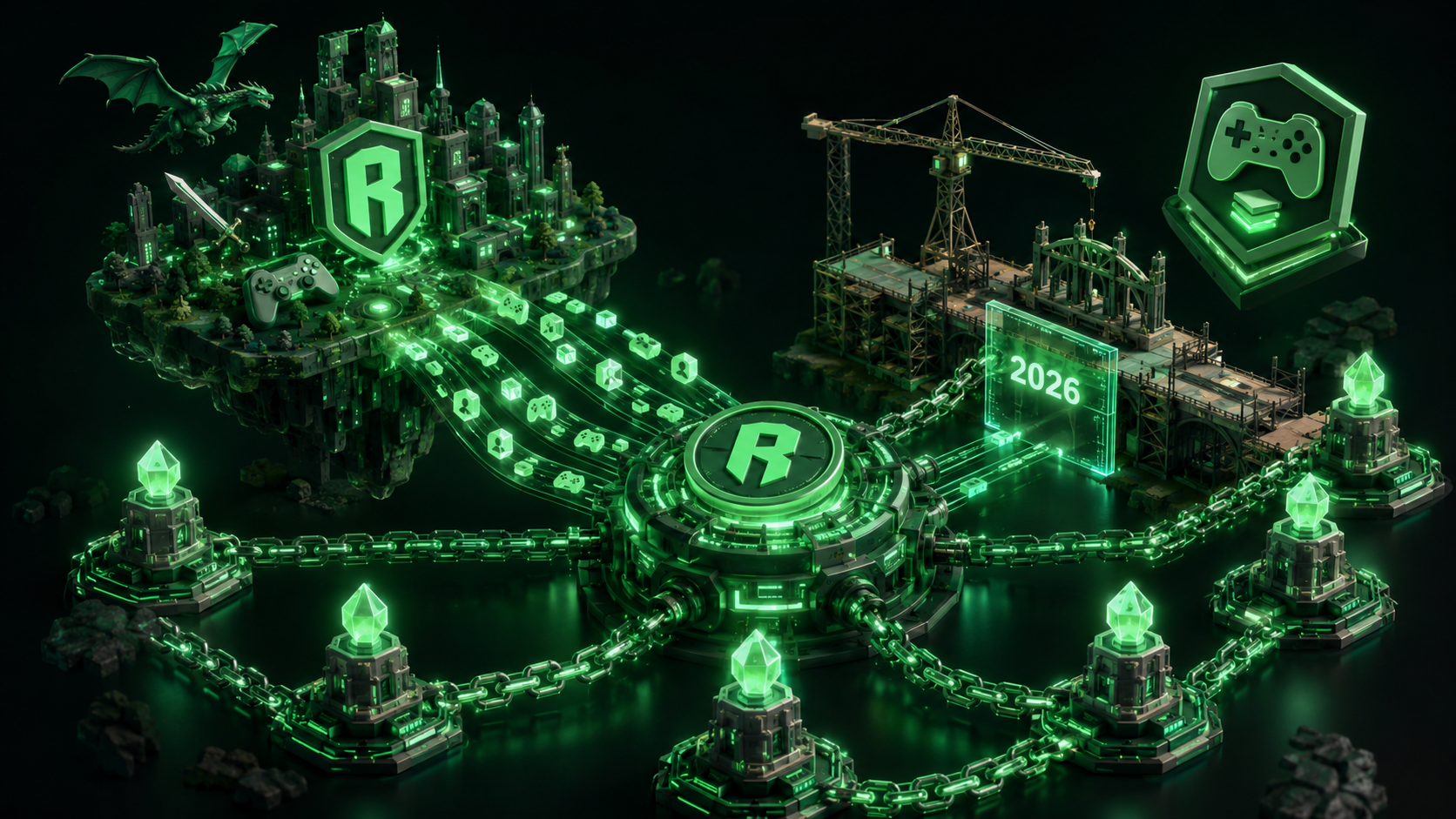
Axie Infinity didn't become the biggest blockchain game by running on Ethereum mainnet. The gas fees alone would have killed it. Sky Mavis built Ronin specifically to solve this problem, creating a gaming-optimized blockchain that processed billions in transactions while keeping costs negligible. Now, with a major transition to Ethereum Layer 2 underway for 2026, Ronin is positioning itself as infrastructure for the broader Web3 gaming industry.
Understanding Ronin matters for AXS holders because the network's success directly impacts token utility and ecosystem growth. The chain hosts not just Axie Infinity but a growing roster of games including Pixels, which drove significant network activity in 2024 and 2025.
What Is Ronin Network?
Ronin is an EVM-compatible blockchain designed specifically for gaming applications. Launched in February 2021 by Sky Mavis, the network functions as an Ethereum sidechain optimized for high transaction throughput and minimal fees. Where Ethereum might charge several dollars per transaction during peak congestion, Ronin processes transfers for fractions of a cent.
The network's architecture prioritizes the specific needs of blockchain games: fast confirmations for responsive gameplay, low costs enabling frequent microtransactions, and seamless asset bridging between Ethereum and the gaming environment.
Key infrastructure components include:
| Component | Function |
|---|---|
| Ronin Bridge | Transfers assets between Ethereum and Ronin |
| Katana DEX | Native decentralized exchange for token swaps |
| Ronin Wallet | Browser extension and mobile app for ecosystem access |
| Mavis Hub | Game launcher and account management |
The RON token serves as the native gas currency, paying for all network transactions. According to Decrypt's coverage, users also stake RON to participate in network security through the Delegated Proof of Stake consensus mechanism.
How Ronin Works
Ronin uses a hybrid consensus model combining elements of Proof of Authority and Delegated Proof of Stake. This approach sacrifices some decentralization for dramatically improved performance, a tradeoff that makes sense for gaming applications where speed matters more than maximum trustlessness.
Validators process transactions and produce blocks, earning RON rewards for their service. Since April 2023, any RON holder with sufficient stake can delegate tokens to validators, participating in network security while earning yield. This opened participation beyond the original trusted validator set.
The network achieves near-instant transaction finality, processing hundreds of thousands of daily transactions at peak usage. For players, this means in-game actions feel immediate rather than waiting for blockchain confirmations.
Bridging assets requires the Ronin Bridge, which connects Ethereum mainnet to the Ronin sidechain. Users deposit ETH or supported tokens on Ethereum and receive wrapped versions on Ronin. The bridge underwent significant security upgrades following the 2022 incident and now integrates Chainlink's CCIP for cross-chain communication.
The 2022 Hack and Security Response
Any discussion of Ronin must address the March 2022 bridge exploit. Attackers compromised validator private keys through social engineering, draining approximately $622 million in ETH and USDC. The U.S. Treasury attributed the attack to North Korean state-sponsored hackers.
Sky Mavis responded by fully reimbursing affected users by June 2022, raising $150 million specifically for this purpose. According to The Block's reporting, the incident prompted comprehensive security overhauls including expanded validator sets, enhanced verification processes, and third-party security audits.
The recovery demonstrated Sky Mavis's commitment to users, though the vulnerability exposed risks inherent in centralized bridge designs. The upcoming Layer 2 migration addresses this by inheriting Ethereum's security guarantees rather than relying on a separate validator set.
The Layer 2 Transition
Ronin announced in August 2025 that it would migrate from an independent sidechain to a full Ethereum Layer 2, with completion expected by Q2 2026. This represents a fundamental architectural shift with significant implications for the ecosystem.
The transition involves moving from the current DPoS consensus to zkEVM technology, using zero-knowledge proofs to inherit Ethereum's security while maintaining Ronin's performance characteristics. Sky Mavis cited several motivations for the change:
Security Enhancement: Layer 2s derive security from Ethereum rather than maintaining independent validator sets, reducing attack surface.
Cost Reduction: L2s pay Ethereum for data availability rather than compensating validators with RON, potentially improving tokenomics.
Institutional Alignment: Ethereum's growing institutional adoption, including ETF approvals and corporate treasury allocations, creates opportunities for Ronin to tap into broader capital flows.
Performance Improvement: The new architecture promises 12x faster transaction processing compared to current capabilities.
For traders monitoring AXS price movements, the L2 transition represents a significant catalyst. Successful migration would validate Sky Mavis's technical capabilities while positioning Ronin for expanded use cases beyond gaming.
Games and Ecosystem
While Axie Infinity launched Ronin, the network now hosts multiple games and applications:
Axie Infinity: The flagship title continues operating with Origins and Classic modes, maintaining roughly 225,000 daily active users combined. The upcoming Atia's Legacy MMO will expand the franchise significantly. For those questioning the project's viability, recent ecosystem analysis shows continued development despite reduced player counts from peak levels.
Pixels: This farming simulation game migrated from Polygon to Ronin in 2024, bringing substantial user activity. The game's success demonstrates Ronin's ability to attract projects beyond Sky Mavis's own titles.
DeFi Integrations: Uniswap v3 deployed on Ronin, and Compound markets provide lending functionality. These integrations expand utility beyond pure gaming use cases.
Katana DEX: The native exchange handles token swaps within the ecosystem, with recent upgrades enhancing DeFi capabilities.
The ecosystem's diversification reduces dependency on any single game while creating network effects that benefit all participants. More games mean more transactions, which means more demand for RON as gas currency.
RON Tokenomics
RON launched in January 2022 with a total supply of 1 billion tokens. Distribution allocated portions to the community, team, ecosystem development, and strategic partners.
Primary token utilities include gas payments for all Ronin transactions, staking for network security participation and yield generation, and governance rights over protocol parameters. Sky Mavis has implemented measures to manage circulating supply, including re-locking unlocked tokens and transitioning holdings to multi-signature wallets.
The Layer 2 transition introduces a new "Proof of Distribution" tokenomics model that rewards active developers based on contribution scoring. This shifts from passive distribution toward incentivizing ecosystem building.
Storing and Managing RON
The Ronin Wallet serves as the primary interface for ecosystem interaction. Available as both browser extension and mobile app, it handles RON storage, staking delegation, and connections to games and DeFi protocols.
For users holding significant AXS alongside RON, hardware wallet support through Ledger and Trezor provides enhanced security for long-term storage. Those evaluating wallet options for Axie assets should consider whether they need frequent ecosystem interaction or prioritize cold storage security.
The wallet expanded support in 2024 to include Polygon and BNB Chain compatibility, along with Binance Pay integration for fiat onramps. This multi-chain capability positions Ronin Wallet as a broader Web3 gateway rather than single-ecosystem tool.
Investment Considerations
Ronin's trajectory depends on several factors worth monitoring.
The Layer 2 migration represents both opportunity and execution risk. Successful transition would strengthen the network's competitive position, while delays or technical issues could undermine confidence.
Gaming ecosystem growth determines RON demand. More active games generating more transactions creates sustainable utility beyond speculation. The 70% decline in active addresses reported during 2025 highlights volatility tied to game popularity cycles.
Competition from other gaming-focused chains and Layer 2 solutions intensifies pressure to deliver compelling developer and user experiences. Ronin's first-mover advantage in gaming doesn't guarantee continued dominance.
Ronin's Role in Blockchain Gaming
Ronin proved that purpose-built infrastructure could enable blockchain gaming at scale when Ethereum mainnet couldn't. The network processed over $4 billion in NFT volume and $9.4 billion in lifetime DEX activity, demonstrating real utility beyond speculative hype.
The evolution from Axie-focused sidechain to general gaming Layer 2 reflects maturing ambitions. Sky Mavis envisions Ronin as the "gamification engine" for crypto, supporting gamified DeFi, SocialFi applications, and AI-driven experiences. Whether this vision materializes depends on execution, with the 2026 Layer 2 launch testing Sky Mavis's ability to deliver complex infrastructure upgrades while maintaining ecosystem activity.
Trade AXS on LeveX spot markets for direct exposure to the Axie ecosystem, or use futures contracts to trade Layer 2 migration catalysts with leverage. Explore our Crypto in a Minute guides for deeper coverage of blockchain infrastructure and gaming tokens.