
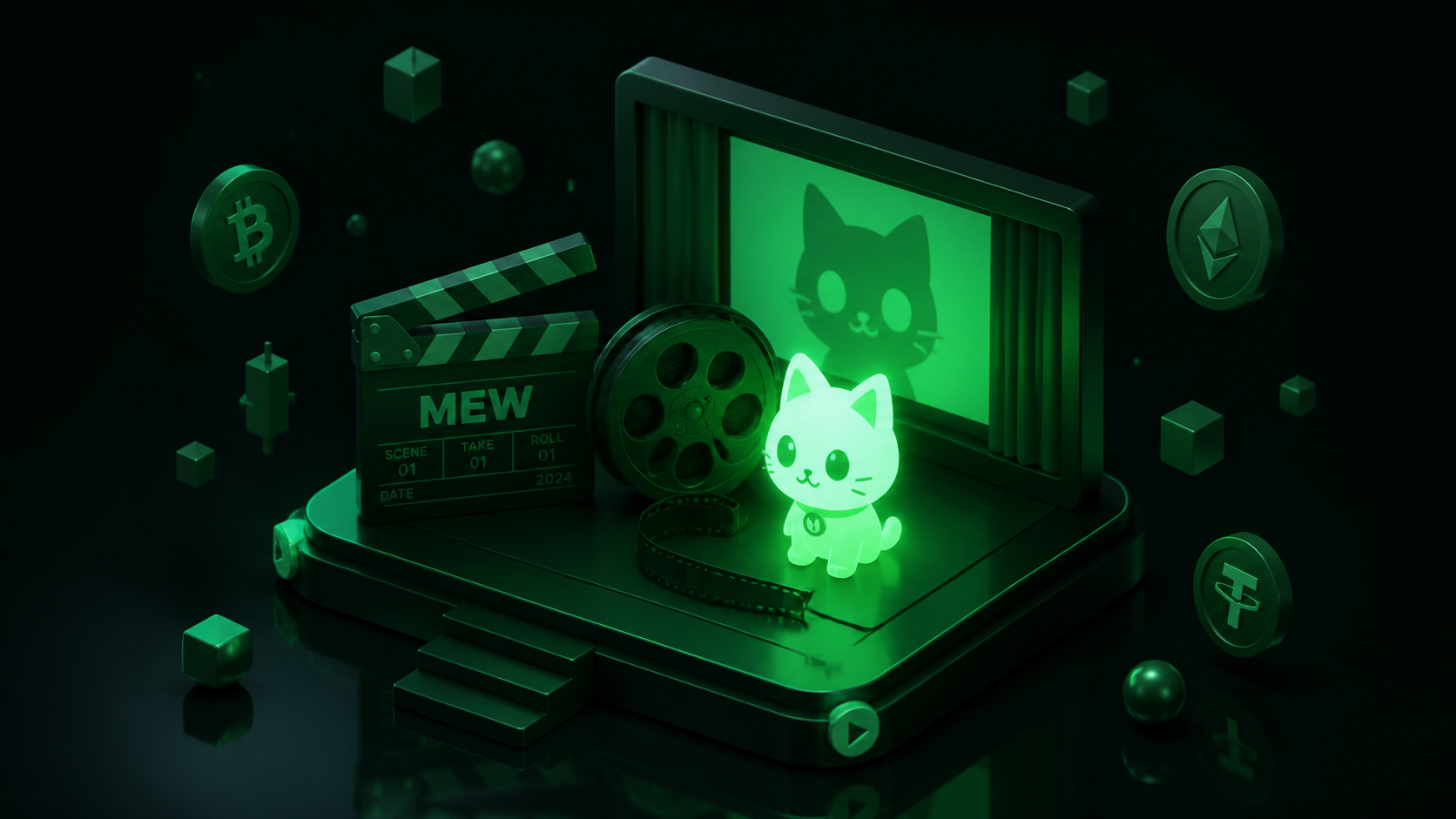
In May 2024, two months after launching, Cat in a Dogs World signed a partnership with LOCUS, a South Korean animation studio with theatrical feature credits, to build a 3D animated series around its cat character. The deal made MEW one of the very few memecoins attempting to convert a ticker into a media property with production value behind it, and it remains the single strongest argument for owning the token.
It is also a bet with a timing problem that has now run for two years.
The Studio and the Deal
LOCUS is a real production house, responsible for Red Shoes and the Seven Dwarfs and the animated adaptation of Yumi's Cells, with theatrical distribution reaching 128 countries. The partnership, announced through the project's channels and covered by outlets including Invezz, commits the studio to producing Web3-native animated content built on MEW's existing story world.
That world already has structure. A cat wakes in a city run by dogs, lives among rats at the bottom of the hierarchy, and comes up against SHIBEX, the dog-run corporation that writes the rules. The setup gives an animation team what most memecoins cannot supply: characters, a conflict and a setting that can carry episodes.
Collaborations, merchandise drops and content releases run through the project's own channels at mew.xyz rather than through any token mechanism.
Owning the Character Is the Rare Part
Almost every memecoin borrows its image. Dogecoin used a photograph of a Shiba Inu named Kabosu. Popcat is built on a viral image of a real cat called Oatmeal, owned by its photographer. Those tokens can reference the meme, and they cannot license it, animate it or sell merchandise built on it without permission they do not hold.
MEW commissioned original artwork and owns the rights outright. That distinction is invisible on a price chart and decisive for anything commercial. It is the reason a studio could sign a production deal at all, and it is the clearest structural difference in the MEW versus Popcat comparison, where Popcat wins on liquidity and loses on ownable brand assets.
The precedent traders point to is that character IP compounds while memes decay. A recognizable animated character can appear in new formats for decades. A screenshot that stopped being funny is worth nothing. Whether MEW's cat can make that transition is unproven, and the attempt itself puts the project in a different category from tokens that only have a picture.
What Two Years Actually Produced
Progress has been slower than the token's price cycle, which is the honest summary. Animation runs on multi-year production schedules while memecoin attention turns over in weeks, and MEW's market capitalization fell from roughly $900 million at launch to about $30 million by August 2026 while the series was still in development.
In June 2026 the pseudonymous founder, Koop, said it was the "perfect time to bring MEW back" with the original community takeover team leading the effort. The stated priorities:
- A dedicated mobile app for the community
- Cross-chain liquidity to widen access beyond Solana
- Further animated content built on the LOCUS partnership
- Renewed merchandise and collaboration output
Announcements like these have historically produced sharp, short-lived rallies rather than trend changes, which is a pattern worth knowing before treating any of them as an entry signal. The MEW price scenarios discuss how much weight to give catalysts on a token this thin. Holders planning to sit through a multi-year production timeline should also think about custody, and the wallet options for storing MEW cover what that looks like in practice.
Can Media Success Reach the Token?
This is the question that determines whether any of it matters financially, and the answer is uncomfortable.
MEW has no mechanism connecting commercial success to token value. There is no revenue share, no buyback funded by merchandise sales, no burn tied to licensing income and no treasury. As the MEW tokenomics structure makes clear, the supply was fully distributed at launch with nothing held back and nothing accruing since. If the series becomes a hit, the token benefits only through attention: more people learn the character, some of them buy the token, demand rises.
That transmission is real, and it is indirect and unreliable. Plenty of successful entertainment brands have associated tokens that went nowhere, because a viewer enjoying a show has no reason to buy an asset that gives them nothing. The strongest version of the bull case is narrower than "the show succeeds." It is that the show keeps the community alive and the ticker visible long enough for the next speculative cycle to find it.
Frequently Asked Questions
Has the MEW animated series been released?
No full series has launched as of August 2026. The LOCUS partnership was announced in May 2024 and the project has released promotional and short-form animated content since, with further episodes referenced in the June 2026 relaunch plan. Animation production timelines commonly run several years.
Does MEW really own its intellectual property?
Yes. The character and artwork were commissioned for the project rather than adapted from an existing meme, so the project holds the rights. This is what allows licensing, merchandise and a studio production deal without third-party copyright exposure.
Does the animation deal give MEW holders any revenue?
No. There is no revenue share, dividend or buyback attached to the token. Any benefit to holders comes indirectly through attention and demand rather than through a contractual claim on commercial income.
What the Bet Actually Rides On
MEW is trying to do something almost no memecoin attempts, which is to build a durable character brand on top of a token that started as a joke about cats and dogs. The IP ownership is real, the studio is real, and the runway that a media property offers is longer than the runway a meme gets.
The gap between that ambition and the token's price is the whole trade. Two years in, the project has a partnership, a story world and a relaunch plan, against a 97% drawdown and a sector that has spent those same two years contracting. Anyone buying the thesis should be buying the multi-year version of it and sizing accordingly.
Hold a view on the outcome with MEW on spot, or trade the volatility around announcements using MEW perpetual futures on LeveX. More project deep-dives are collected in Crypto in a Minute.