

The $68 Million Midterm Bitcoin Bet, Decoded
$68 million is the number that made the headlines. On October 20, a single wallet on the decentralized options venue Derive bought 800 bitcoin call options with a $90,000 strike expiring November 6, three days after the U.S. midterm elections, and CoinDesk reported it as the largest open bitcoin position on the platform. Read as a headline, it sounds like a whale betting the farm on an election rally. Read as a trade ticket, it says something narrower and more interesting about how this trader expects the next few weeks to unfold.
What the Trade Ticket Actually Says
The $68 million is face value: 800 contracts, each covering one BTC, multiplied by a spot price near $85,000 at the time. The money actually at risk is the premium on those calls, a small fraction of that figure. And the buyer did not stop at buying. The same wallet sold two other legs, and the sales brought in roughly $940,000 that went toward paying for the purchase.
| Leg | Strike | Expiry | Contracts | What it expresses |
|---|---|---|---|---|
| Bought calls | $90,000 | November 6 | 800 | A sharp move up after the vote |
| Sold calls | $90,000 | October 30 | 400 | Little expected before the vote |
| Sold calls | $100,000 | March 2027 | 400 | Any rally probably stalls below $100,000 |
Put together, the structure describes a calendar. Selling the October 30 calls is a bet that the pre-election week stays quiet, which lets the trader collect premium from people who expect fireworks too early. The November 6 calls are the payload, a wager that bitcoin clears $90,000 inside a three-day window after the polls close. The March 2027 leg is the tell nobody mentioned: once the November calls expire, the wallet is left short 400 calls at $100,000 for another four months unless it holds bitcoin or other hedges elsewhere. That is the position of someone who expects a pop, and expects the pop to run out of steam.
That reading fits the rest of the market better than the "giant bull" framing does. Derive's implied probability of bitcoin topping $100,000 by Christmas rose from 9.7% to 12% over the week, which is movement, but it still prices a six-figure bitcoin as a long shot. Over on the larger centralized options venue, front-end skew for BTC and ETH stayed negative, meaning puts cost more than calls. Most of the money is paying for protection. One wallet is paying for a very specific, very short burst.
Midterm Weeks Have a Rough Record
Anyone who traded through the last two midterms is entitled to some skepticism about election-week rallies. In November 2018, bitcoin sat around $6,400 on election day, and within a month the Bitcoin Cash hash war had helped drag it under $4,000. In November 2022, the vote landed in the same week FTX collapsed, and bitcoin fell from roughly $20,000 to the mid-$15,000s before Thanksgiving. Neither crash had much to do with politics, which is exactly the point. Election week is a calendar date, and the market has shown little interest in respecting calendar dates.
This year the setup is crowded with other catalysts. The Fed decides on October 28 with the market pricing only an 8% chance of a hike, Brent crude has pushed above $110 on renewed Middle East attacks, and bitcoin spent Monday dipping below $80,000. A breakout to $90,000 from here needs about 12.5% in roughly ten days. That has happened plenty of times in bitcoin's history, though it usually needs a reason bigger than a seat count in the House.
The LeveX Take
The real information in this trade is its expiry date. The wallet built a position that pays only if the move arrives between November 3 and November 6, and it financed part of that bet by selling the idea of a rally that comes early or lasts too long. For traders, the transferable lesson is that a catalyst view is two views at once, one about direction and one about timing, and most losses on event trades come from getting the timing wrong while the direction eventually proves right.
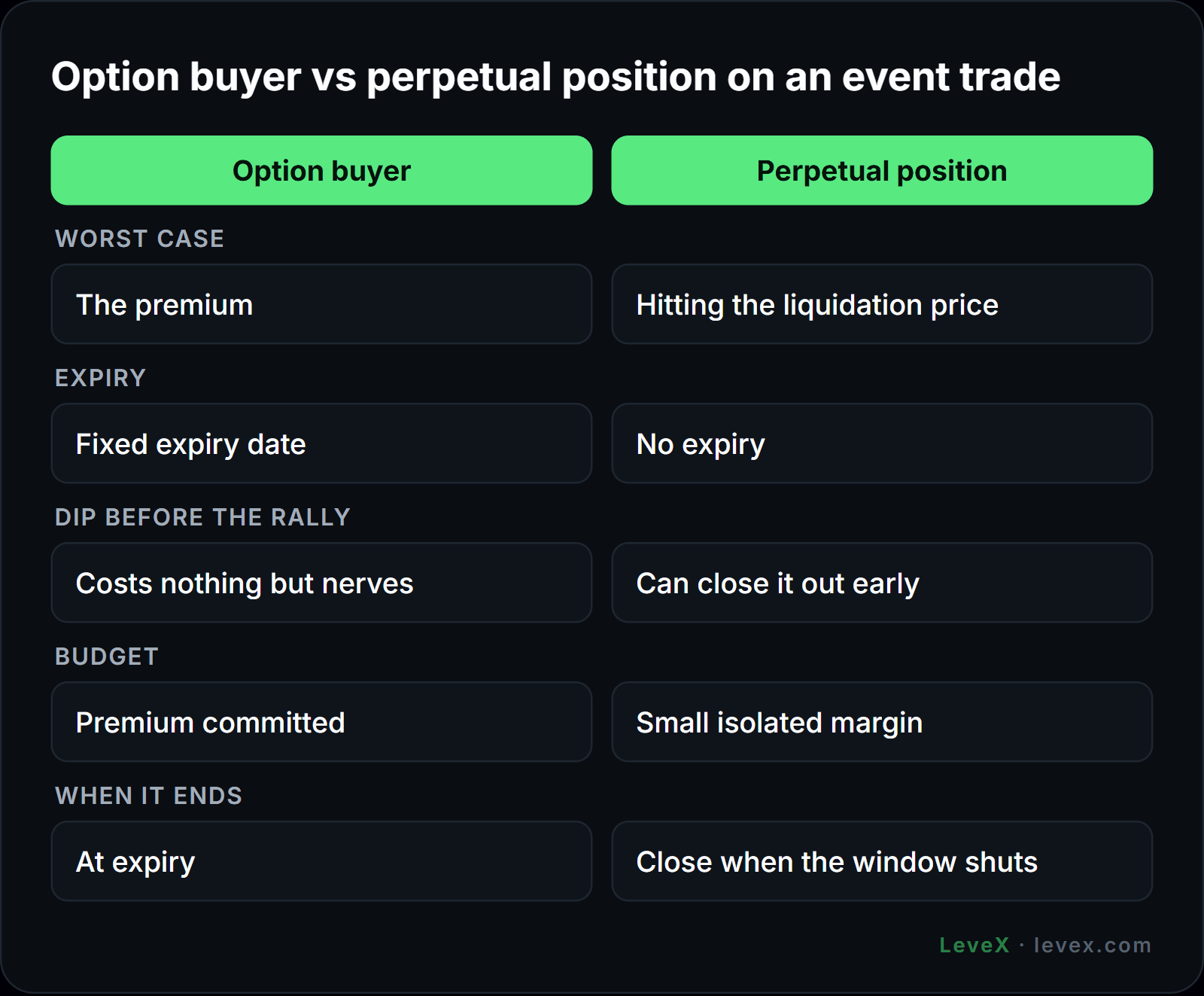
That is where leverage choice becomes the whole trade. An option buyer's worst case is the premium, and a dip before the rally costs nothing but nerves. A perpetual position has no expiry, but it has a liquidation price, and a sharp wick before election night can close it out before the thesis ever gets tested. LeveX offers up to 500x leverage on BTC perpetuals, and the honest way to use that for an event like this is in reverse of the instinct: commit a small isolated margin you are prepared to lose, the way an option buyer commits premium, and accept that the margin is your premium. Treat it as a defined budget for a three-day thesis, and close it when the window shuts whether or not the move came, because the trader who sold those March calls has already told you how long they think the party lasts.
Four Dates Between Now and November 6
- October 28: The Fed decision. A surprise hike would hit the pre-election window before it opens.
- October 30: The sold $90,000 calls expire. A quiet close below that strike hands the wallet its first win.
- November 3: The midterm vote itself, with results that can take days to settle in close races.
- November 6: The bought calls expire. Bitcoin has to be above $90,000 that day for the payload to pay out.
If you want to take your own view on that window, BTC trades on LeveX spot and perpetual futures, and the Crypto in a Minute series covers options, skew and leverage basics in a few minutes each.