
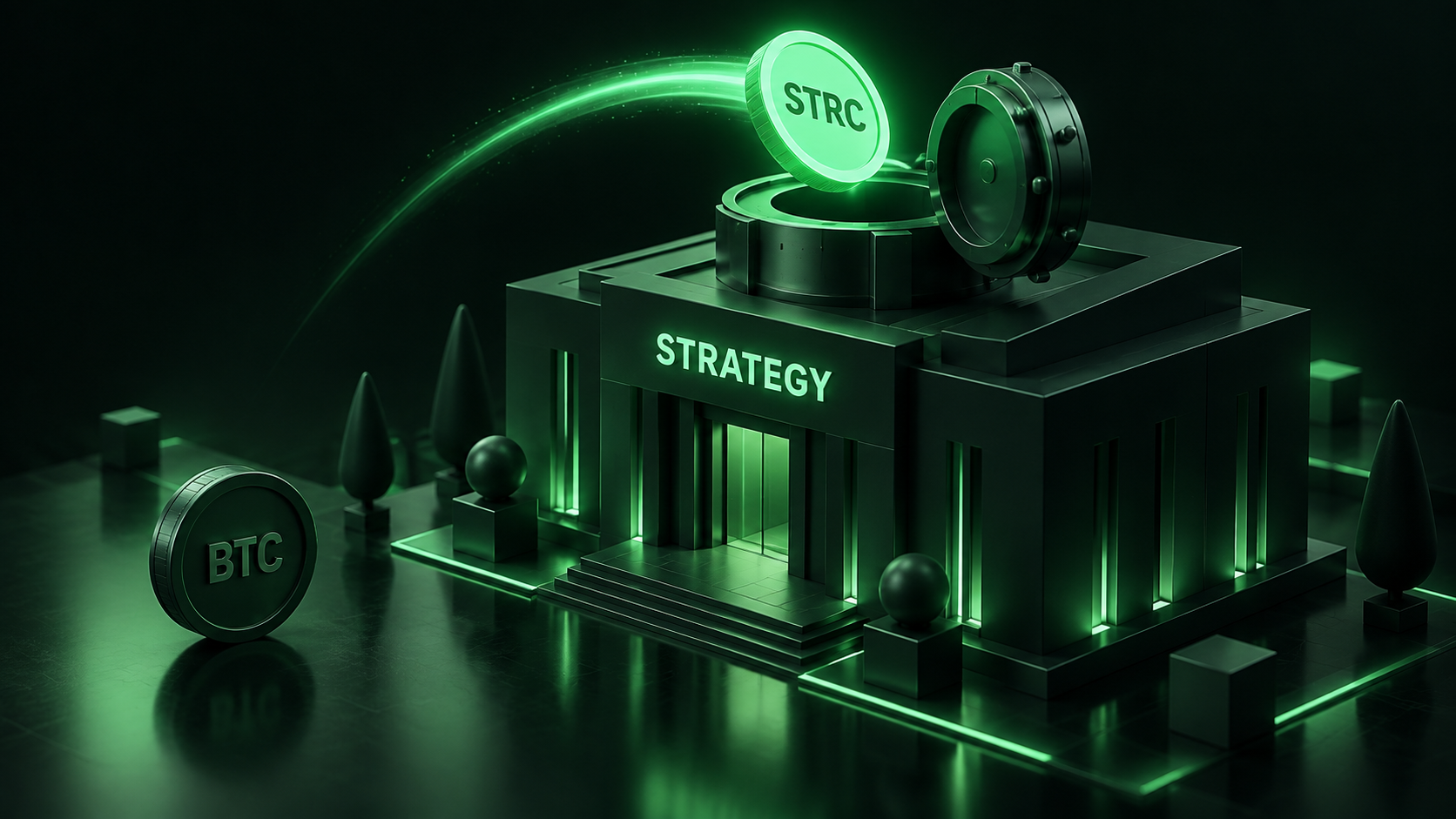
For the second week running, the company that turned buying bitcoin into a corporate identity bought none. Between September 8 and 13, Strategy instead spent $139.3 million of its dollar reserves repurchasing 1,420,467 shares of its own STRC preferred stock, leaving its holdings frozen at 845,050 BTC.
Most coverage treated it as a housekeeping filing. It is the clearest look yet at what Strategy's cash is competing against, and the answer turns out to be its own paper.
Why a 12% Coupon Beats Another Coin
Divide the purchase price by the share count and Strategy paid an average of about $98.07 per share for a security with a $100 stated amount. STRC carries a variable dividend that Strategy is holding at 12% annualized for September, and management has said the rate stays there until STRC shows sustained, healthy trading near $100.
Run the numbers from the company's side of the table:
- Every retired share removes $12 a year in cash dividends, so this single week of buybacks erased roughly $17 million in annual payouts.
- Buying at around $98 turns that saving into a return of about 12.2% on the cash spent, earned whether bitcoin rallies, drifts, or falls.
- Each retired share is also one fewer holder selling below par, which nudges STRC toward the $100 level that would let Strategy stop paying 12%.
Now compare buying bitcoin. Strategy's cost basis sits at $75,412 per coin, while the $65.7 billion market value of the stack implies a price of roughly $77,750, a cushion of about 3%. The stock is down 71% from its 2025 peak and trades at an enterprise mNAV of 1.1, so issuing new common shares to buy coins adds almost nothing in bitcoin per share. With issuance economics that thin, a certain 12% saving beats an uncertain return on another coin.
The flywheel that made Strategy the market's largest structural bitcoin buyer now runs through the price of a preferred stock.
The Bid That Went Quiet
Strategy's model through 2024 and 2025 depended on selling securities at a premium and converting the proceeds into coins. Preferred stock like STRC was supposed to extend that engine, raising money from income investors who wanted yield and had no interest in bitcoin's volatility. The arrangement worked while the preferreds traded at or above par, because every new share sold funded more BTC.
Below par, the logic inverts. Selling fresh STRC at $98 to pay 12% on $100 is expensive money, and it pushes the price further from the level that would allow a rate cut. So the cash flows backward into retiring paper, and a company that used to announce coin purchases most Mondays files an 8-K about preferred shares instead. Income investors were promised a boring security, and in fairness, this is an extremely boring outcome.
The balance sheet shows how deliberate this is. The $5.1 billion USD Reserve is ring-fenced for dividends and interest, the separate $1.3 billion in USD Cash funded the buyback, and the company carries a $2 billion STRC repurchase authorization alongside a $5 billion program that permits bitcoin sales, all of it building on the bitcoin sales framework Strategy introduced in June.
For two years a large share of bitcoin's corporate demand came from one buyer with a predictable weekly habit. Two empty weeks in a row suggest that habit now comes with conditions.
The LeveX Take
Strategy is solving, at corporate scale, the problem every leveraged holder eventually meets. A 3% gap between market price and cost basis is the balance-sheet version of a thin liquidation buffer, and the company's response was to shrink its fixed obligations before adding exposure. Retiring a 12% coupon is de-leveraging. The largest corporate bitcoin holder on the planet looked at a cushion that small and chose to reduce risk first, which is a better risk process than most individual accounts run.
That is the right lens for up to 500x leverage on BTC. At 500x the distance from entry to liquidation is roughly 0.2% before maintenance margin and fees pull it closer, which is inside an ordinary minute of bitcoin trading. The ceiling exists for precise, short-horizon trades around a specific catalyst, and the useful discipline is to work backward from the price where your thesis is wrong, then choose the multiple that keeps liquidation beyond it. Our guide to understanding margin and leverage walks through that math. Strategy sized its obligations to survive a thin cushion, and a position deserves the same treatment.
The implication the filing leaves for everyone else is that STRC's price relative to $100 has become a leading indicator for one of bitcoin's biggest spot buyers. Sustained trading at par reopens cheap preferred issuance and turns Strategy back into a buyer. A slide further below par keeps the cash tied up defending the dividend, and anyone modeling a reliable corporate bid under bitcoin dips should be watching a preferred stock ticker as closely as a bitcoin chart.
What STRC at $100 Would Change
Strategy's next holdings update is due Monday, September 21. Another STRC repurchase with an empty bitcoin line would confirm that cash is being prioritized for the preferred. An at-the-market sale of STRC near par, followed by a coin purchase, would signal the engine has restarted.
Treasury companies were sold to the market as a one-way bid, and this is what that bid looks like when funding costs rise: disciplined, rational, and pointed somewhere other than bitcoin. The wider bitcoin treasury premium story was always about the fuel, and this week showed what the machine does when the fuel gets expensive.
For bitcoin exposure without a preferred stock stack in between, LeveX runs BTC on spot and futures, and the Crypto in a Minute series explains how corporate treasuries move the market.