
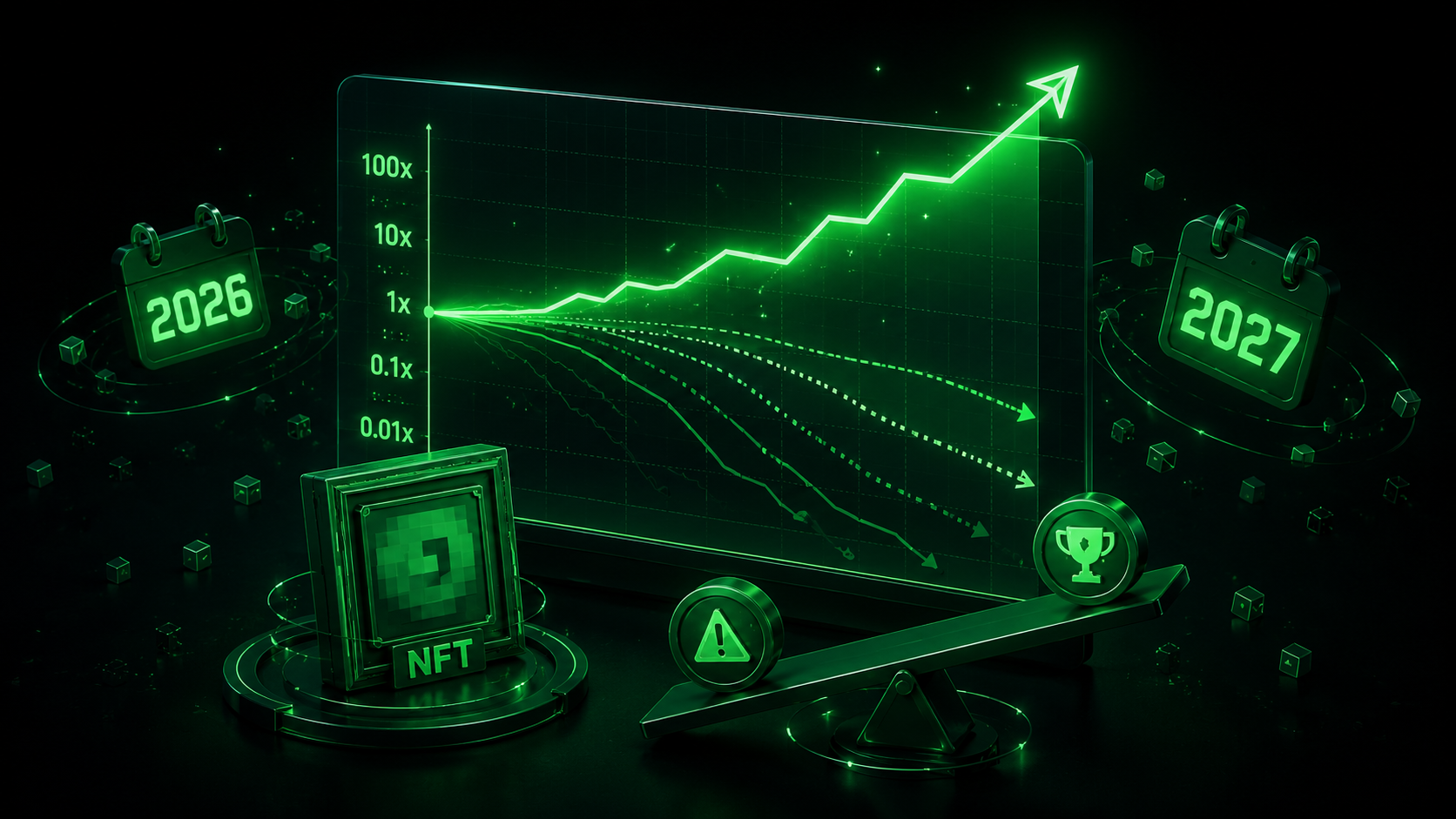
Blur (BLUR) trades around three cents in early 2026, a long way from the dollar-plus levels it touched shortly after its February 2023 launch. Any credible price model starts with one fact: almost the entire supply is already circulating, so the unlock-driven sell pressure that weighs on younger tokens barely applies here. What moves BLUR now is demand, specifically NFT market activity and the platform's ability to keep its trading crowd.
Where BLUR Trades Now
As of early 2026, BLUR changes hands near $0.03 with a market cap in the mid-$80 million range and roughly 2.8 billion of its 3 billion tokens in circulation. CoinGecko and CoinMarketCap both track the live figures.
That near-complete circulation is unusual for a token barely three years old. The four-year vesting schedule that released team, investor, and treasury allocations winds down in 2027, and most of it has already reached the market. The practical effect is that BLUR's float no longer faces large scheduled unlocks, so price discovery leans on organic supply and demand rather than a vesting calendar.
What Drives BLUR's Price
Three forces matter more than anything else for where the token goes from here.
The NFT market cycle sets the ceiling. Blur's revenue thesis depends on people trading NFTs, and that activity is highly cyclical. When collections rally and volumes spike, the marketplace sees heavier usage and the token tends to follow. When the sector cools, BLUR usually cools with it.
Then there's market share. Blur captured the professional trading crowd with zero fees and advanced tooling, and holding that lead protects the franchise value baked into the token. A rival matching the same fee model could chip away at it.
Treasury policy adds the wildcard. The DAO controls a large treasury, much of it earmarked for trading incentives. Generous emissions can stimulate volume in the short term while adding sell pressure as recipients cash out. How the token is structured and where that supply sits is covered in our BLUR tokenomics breakdown.
A fourth, looser influence is the broader crypto market. BLUR is a small-cap altcoin, so it tends to amplify the direction set by Bitcoin and Ethereum rather than trade on its own. Risk-on phases lift it disproportionately, and market-wide sell-offs tend to hit it harder than large caps. There is also an ecosystem angle: founder Pacman's separate work on the Blast network keeps Blur adjacent to a wider community, and attention flowing into that orbit occasionally spills over into BLUR. None of these forces is predictable, but together they explain why the token can move sharply on days when nothing specific to Blur has changed.
Analyst Forecast Ranges
Independent forecasting services span a wide range, reflecting how differently each one weighs a possible NFT recovery against BLUR's thin token utility. CoinCodex and similar trackers update these models as conditions change.
| Source | Near-term range | Methodology lean |
|---|---|---|
| Changelly | $0.03–$0.06 | Technical, momentum-based |
| CoinCodex | $0.02–$0.05 | Conservative, supply-aware |
| Market consensus | sub-$0.10 | Tied to NFT volume recovery |
These are projections, not promises. Every model assumes a path for the broader NFT market that may not play out, and none can price in a sudden shift in DAO incentive policy.
Risks That Cap the Upside
BLUR's biggest structural weakness is utility. The token governs the DAO and unlocks some platform perks, but it does not capture marketplace fees, because there are none. Without a direct revenue link, its value rests on governance demand and speculation rather than cash flow.
The NFT sector itself is the second risk. Trading volumes remain well below the 2021-2022 peak, and a prolonged drought would keep pressure on every NFT-linked asset. A competitor matching Blur's fee structure while bundling multi-chain support is the third risk, since it would erode the market share that justifies BLUR's valuation. Anyone sizing a position should treat the token as a high-beta bet on NFT activity and manage risk to match.
How to Read BLUR's Trajectory
BLUR is a high-beta proxy for NFT market sentiment with most of its supply already unlocked. That makes its chart unusually responsive to sector swings and to the DAO's incentive decisions, and far less exposed to the mechanical unlock pressure that drags on newer tokens. The upside case rests on an NFT recovery that pushes volume back through Blur's marketplace. The downside case rests on a stagnant sector and a token with no fee capture.
For anyone trading BLUR, position sizing and a clear invalidation level matter more than any single price target, given how quickly NFT sentiment can turn. Forecasts are a starting point for your own research, never a substitute for it.
Trade BLUR on the spot market or take a leveraged position with BLUR futures on LeveX. Browse Crypto in a Minute for more token analysis.