
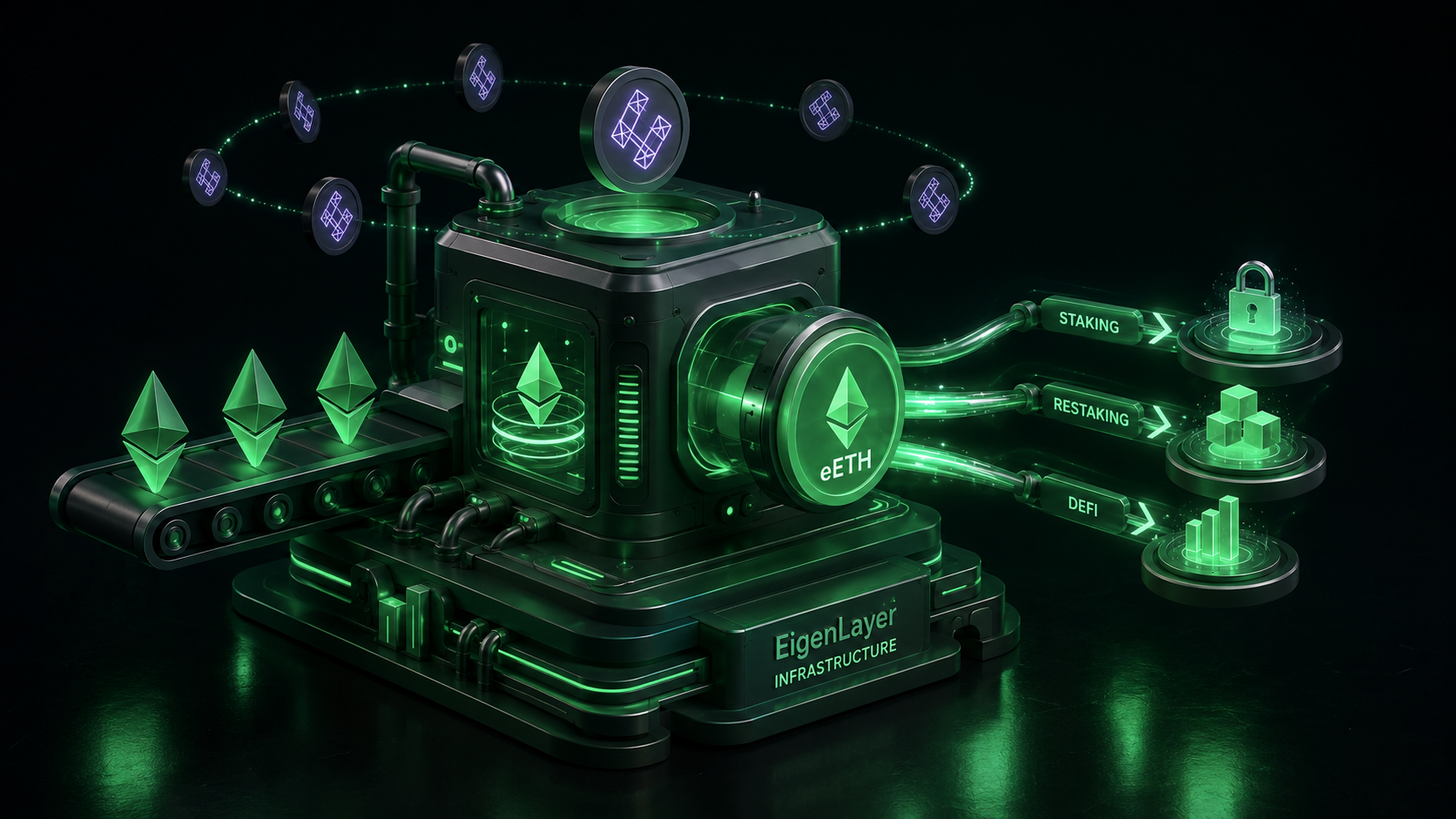
ETHFI is the governance token behind ether.fi, the largest liquid restaking protocol on Ethereum with over $5 billion in total value locked. Founded by Mike Silagadze in 2022, ether.fi lets users stake ETH and receive a liquid token (eETH) that earns staking rewards, restaking yields through EigenLayer, and loyalty incentives, all without giving up control of their validator keys.
The protocol launched its ETHFI token in March 2024, and as of early 2026, it trades at approximately $0.58 with a market cap around $430 million. With over 743 million ETHFI tokens in circulation out of a 1 billion maximum supply, the token governs key protocol decisions while also serving as collateral for node operators.
What Makes ether.fi Different From Traditional Staking
Most liquid staking protocols work like this: you deposit ETH, receive a liquid staking token (LST), and that token appreciates in value as staking rewards accrue. Lido's stETH and Rocket Pool's rETH pioneered this model. The problem comes when you want to restake, which means taking your already-staked ETH and committing it to additional validation services through EigenLayer to earn extra yield.
With traditional restaking, you deposit your LST into EigenLayer's contracts and it becomes locked. No transfers, no DeFi usage, and a 14-day withdrawal period if you want out. ether.fi solves this by integrating restaking at the protocol level. When you stake ETH through ether.fi, the restaking happens automatically, and you still receive a liquid token (eETH) that you can use across DeFi.
The other critical distinction is key ownership. On most liquid staking platforms, the protocol controls validator keys. ether.fi uses a non-custodial architecture where stakers retain control over their keys through a distributed key generation system. This means ether.fi never has unilateral control over the staked ETH, which reduces centralization risk and aligns with Ethereum's ethos of decentralization.
How eETH and weETH Work
ether.fi issues two tokens that represent your staked position:
| Token | Type | Mechanism | Best For |
|---|---|---|---|
| eETH | Rebasing ERC-20 | Balance increases automatically as rewards accrue | Holding in wallets, simple tracking |
| weETH | Non-rebasing wrapper | Price per token increases instead of balance | DeFi integrations, cross-chain bridging |
eETH is the primary liquid restaking token. When you stake 1 ETH through ether.fi, you receive eETH that starts accruing three layers of yield: Ethereum consensus rewards (the base staking yield), EigenLayer restaking rewards (from securing additional services called Actively Validated Services), and ether.fi loyalty points that can convert to protocol incentives.
weETH wraps eETH into a format that plays better with DeFi protocols. Instead of your token balance changing (which some smart contracts handle poorly), the value per weETH token increases. This makes weETH the preferred choice for lending, borrowing, and providing liquidity across the ecosystem.
The ether.fi Cash Card
In one of the more ambitious moves in DeFi, ether.fi launched a Visa-powered crypto credit card called Cash. The product, which opened for physical card applications in January 2026, sits on the Scroll Layer 2 network and lets users spend against their staked ETH collateral without selling it.
The card operates in two modes. Borrow Mode functions as a credit line: ether.fi fronts the payment and deducts from your collateral or a later repayment. Direct Pay Mode works more like a debit card, pulling from stablecoins in your vault. All cashback is paid in wETH, deposited monthly, with rates of 2% for Core members and up to 3% for higher tiers.
What makes this interesting for ETHFI holders is the protocol's evolution beyond pure staking infrastructure. The Cash card positions ether.fi as a DeFi neobank, which expands the potential revenue streams governed by ETHFI token holders.
ETHFI Token Utility and Governance
ETHFI serves three primary functions within the protocol:
Protocol governance gives holders voting power over critical parameters including fee structures, treasury allocation, and which Actively Validated Services (AVS) the protocol supports on EigenLayer. The DAO treasury holds 27.24% of the total supply, giving governance meaningful resources to deploy.
Node operator collateral allows validators to stake ETHFI as security against slashing events. This creates direct demand for the token tied to protocol growth, since more validators means more ETHFI locked as collateral.
Revenue direction lets ETHFI holders influence how protocol fees are distributed. ether.fi takes a percentage of staking and restaking rewards, and governance decides how those funds split between development, audits, treasury growth, and potential future distributions.
Risks and Considerations
The liquid restaking sector carries layered risk that compounds with each integration. ether.fi's eETH is backed by ETH staked across multiple validators, restaked through EigenLayer into various AVS contracts. Each layer introduces its own smart contract risk, and a vulnerability in any one contract could affect the entire stack.
Slashing is another factor. While ether.fi's non-custodial design distributes validator key control, restaked ETH is still subject to slashing conditions from both the Ethereum beacon chain and whichever AVS contracts it secures. The protocol has implemented safeguards, but the risk profile is inherently more complex than plain ETH staking.
Token unlock schedules also matter. Team tokens (23.26%) and investor allocations (32.5%) are unlocking linearly from 2025 through 2028. Significant supply entering the market during this period could create sell pressure, particularly during broader market downturns.
Frequently Asked Questions
What is the difference between eETH and ETHFI? eETH is the liquid restaking token you receive when staking ETH through ether.fi. It represents your staked position and earns yield. ETHFI is the separate governance token used for voting on protocol decisions and staking as validator collateral. They serve completely different purposes.
How does ether.fi compare to Lido? Lido provides liquid staking (stETH), which earns only base Ethereum staking rewards. ether.fi provides liquid restaking (eETH), which earns base staking rewards plus additional EigenLayer restaking yields. ether.fi also offers non-custodial key management, while Lido relies on a curated set of node operators.
Is ETHFI a good investment? ETHFI's value is tied to ether.fi's protocol growth, TVL expansion, and the broader adoption of restaking. Like all crypto assets, it carries significant risk and its price depends on market conditions, execution quality, and competitive dynamics. Always do your own research and consider your risk tolerance before trading.
ether.fi's Role in Ethereum's Restaking Economy
The liquid restaking sector represents one of the fastest-growing categories in DeFi, and ether.fi sits at the center of it. With over $5 billion in TVL and a product suite expanding beyond staking into consumer finance, the protocol has built a position that competitors like Renzo, Puffer, and Kelp have struggled to match.
For ETHFI holders, the token's long-term trajectory depends on whether ether.fi can maintain its TVL dominance as restaking matures and EigenLayer's AVS marketplace grows. The protocol's non-custodial design and Cash card expansion suggest a team thinking beyond the current cycle.
Explore ETHFI on LeveX through spot trading or perpetual futures, and discover more token guides in the Crypto in a Minute series.